For the last few years, my aunt and uncle have rented a house in Palm Springs. My family members have joined them, but I’ve never had the chance until this year. It was my first time going to Palm Springs and my second time going to California in the last half a year, which is funny because before the August visit to see my sister, I hadn’t been to California since I was a kid. Over and over, I had heard how much I would love Palm Springs: the architecture, the weather, and the natural beauty of the surrounding landscape. I was worried that it wouldn’t live up to expectations. It did.
The Location
Palm Springs sits tucked in the heart of the Colorado Desert. The towering San Jacinto Mountains cast a late afternoon shadow across the city, making darkness come faster than it otherwise would. Its sunny, desert landscape that stretches endlessly outward makes it feel like an isolated outpost.
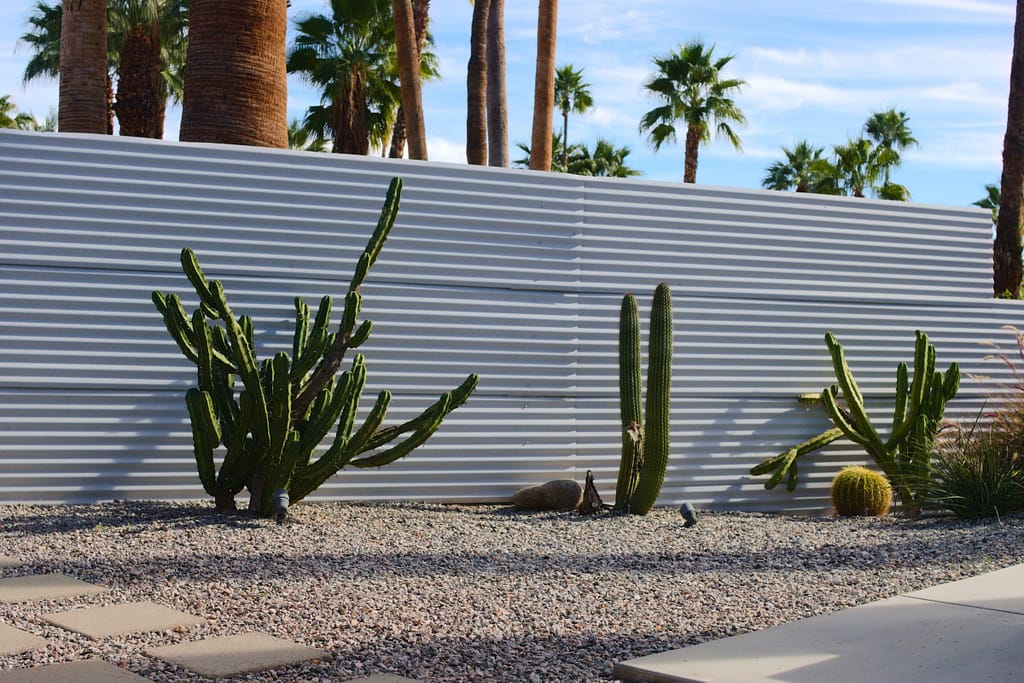
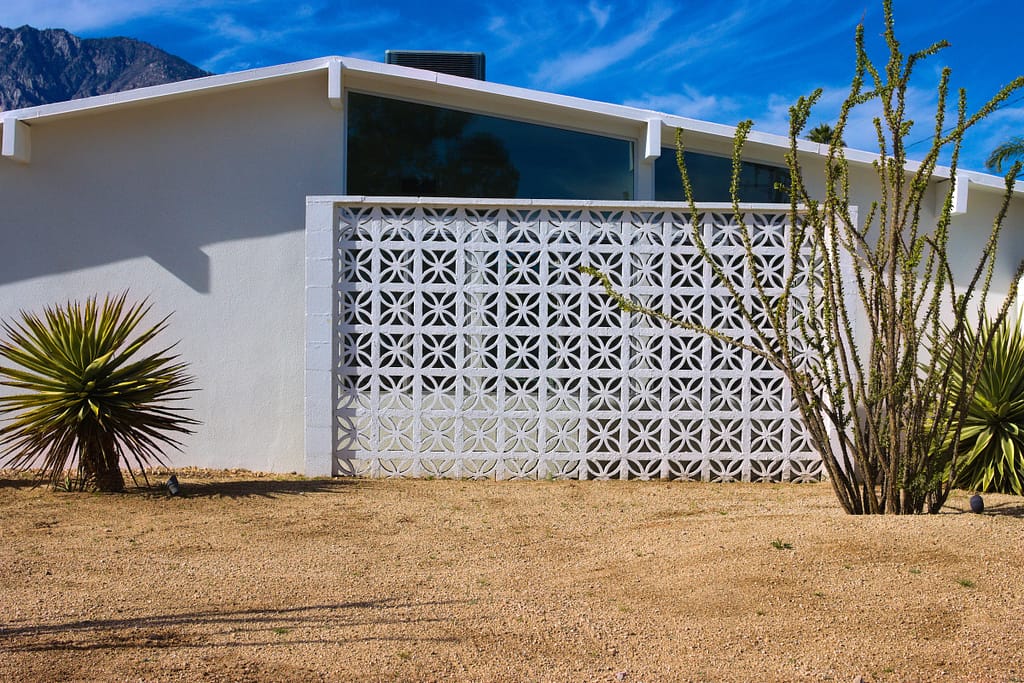
In the background of it all, set amongst the backdrop of mid-century modern architecture, is an ever present, but less noticed aspect. The desert’s plant life. The desert’s fauna, thick, sharp arms, almost sculpture-like, throw crisp, geometric shadows across everything, from the pavement to the painted CMU blocks that line the properties. A lone cactus acts as a sundial as it casts its shadow along the floor and walls. The landscape transformed into a canvas of shadows.
The House
Palm Springs is a mid‑century modern haven. Before this trip, I’d only ever glimpsed a handful of mid‑century homes, like a four‑leaf clover hidden in a field. Where I grew up, there were none, and even in graduate school the occasional example in Blacksburg felt like a rare sight on the way to the Kroger I shopped at.
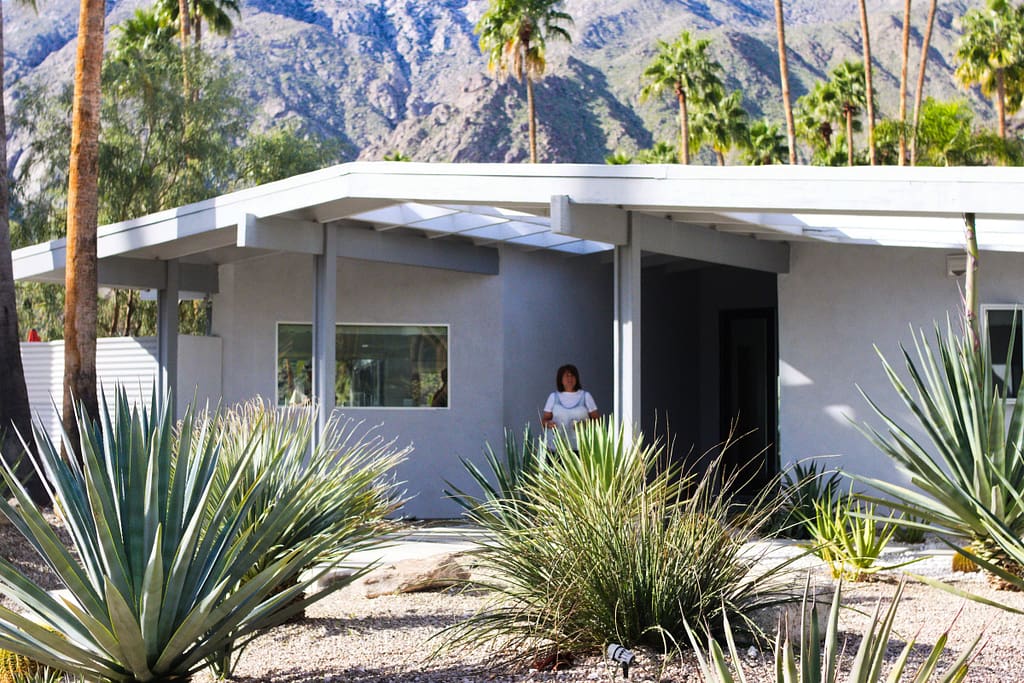
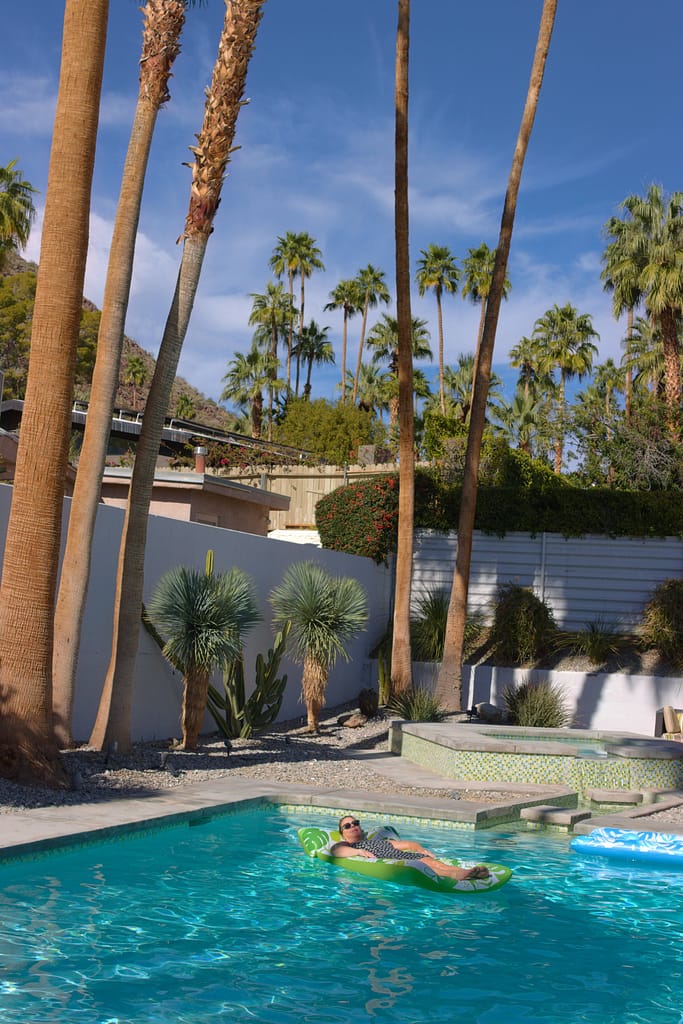
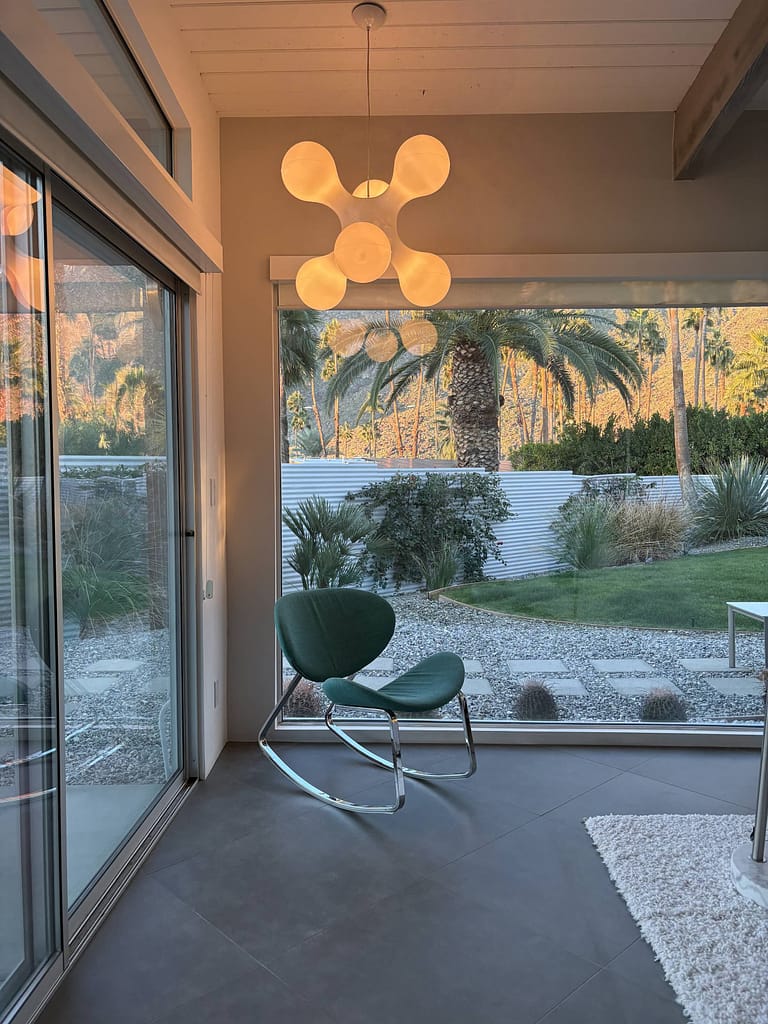
In Palm Springs, however, you are surrounded by them. The house, known as the PS Sparkle House, my aunt and uncle rented, was a mid-century modern beauty. It let me live in, for a few days, the style I had only admired from a distance. While not completely original to its construction date, the renovations preserve the mid-century modern layout, a large fireplace sits central to the living area, while exposed wooden beams run the length of the ceiling.
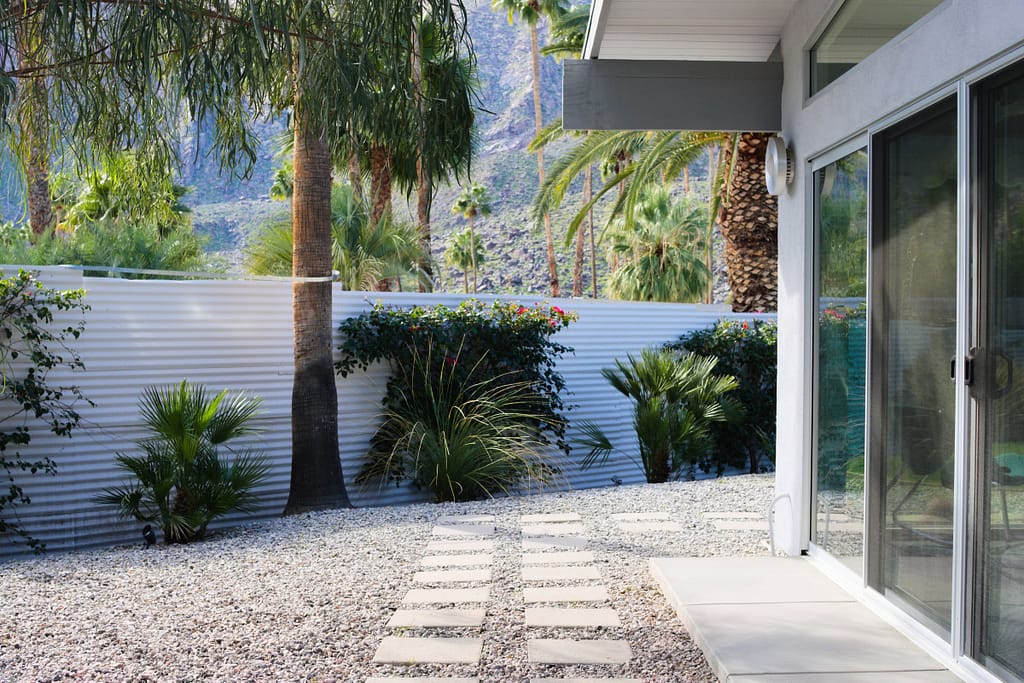
Connected, but in its own little corner was the kitchen, which, arranged in a square with windows on three sides, looks out to both the street, the neighbors and a portion of the backyard. It is a unique layout that feels like you’re inside a fishbowl, but it works quite well and allows easy access to all aspects of the kitchen. In the living room, sliding doors that open directly onto the covered patio and pool preserve the fluid indoor‑outdoor relationship.
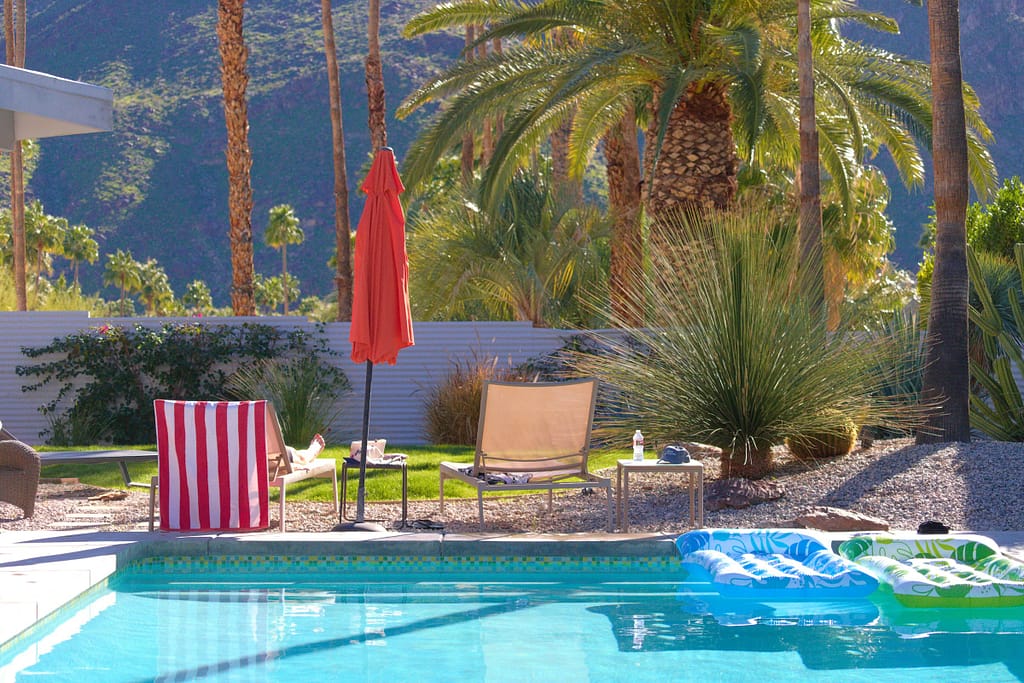
The pool and outdoor area was beautifully done, almost kidney bean-like shaped in how it wrapped around the house and provided multiple zones to relax, a little patch of grass and a pool, hot tub and fire pit area that I can imagine in the 350 days of Palm Springs sun is constantly in use. Although I heard that Palm Springs is not an ideal place to be in the summer. In January, I’m not sure there is a better place to be: eighty-degree sunny days and cloudless skies.
The architecture
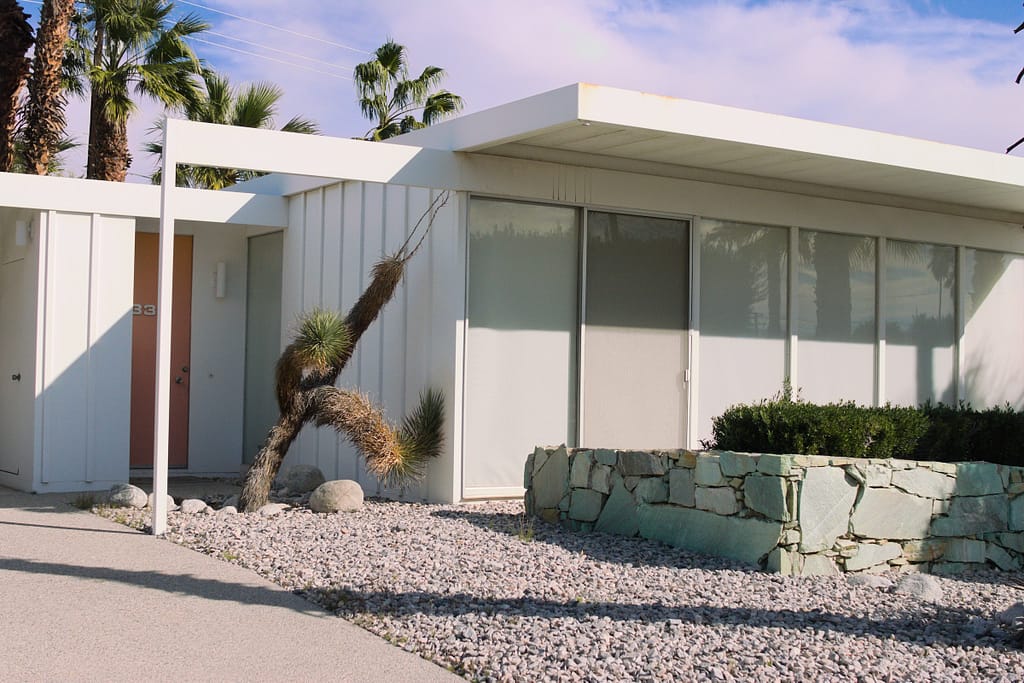
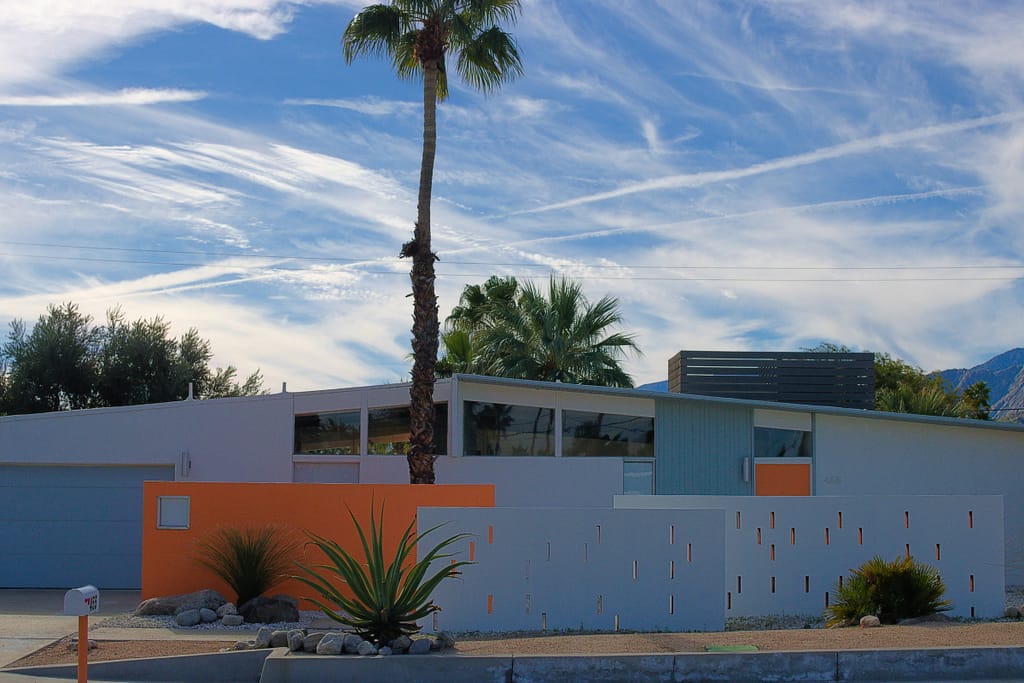
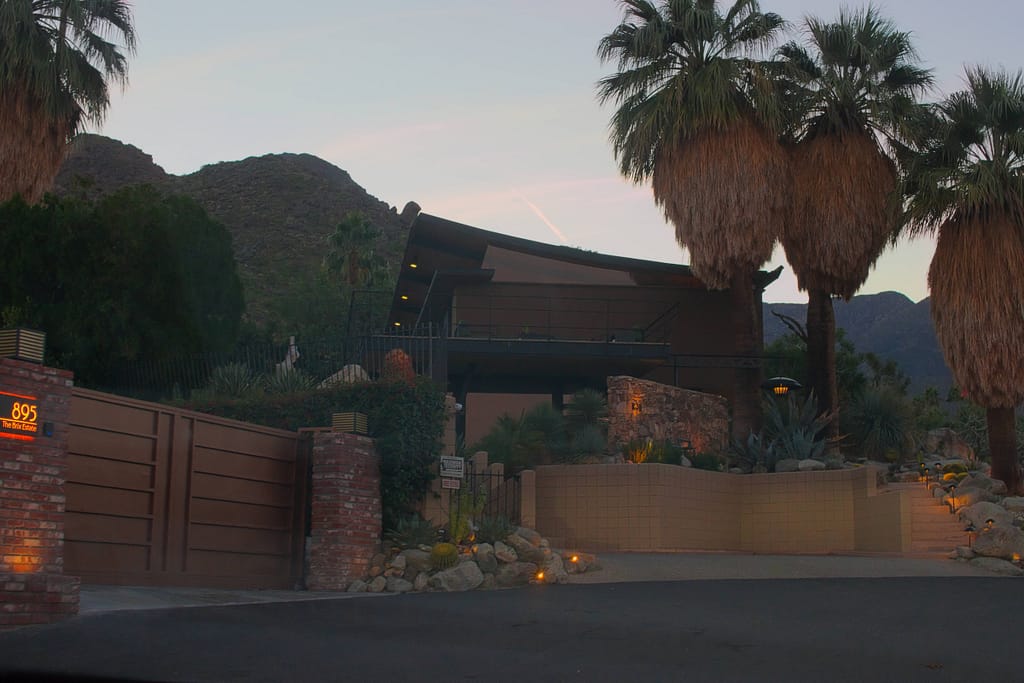
It would be impossible to go to Palm Springs and not do an architectural tour. The city isn’t just a showcase of mid-century modern houses, it’s a museum to the mid-century modern movement.
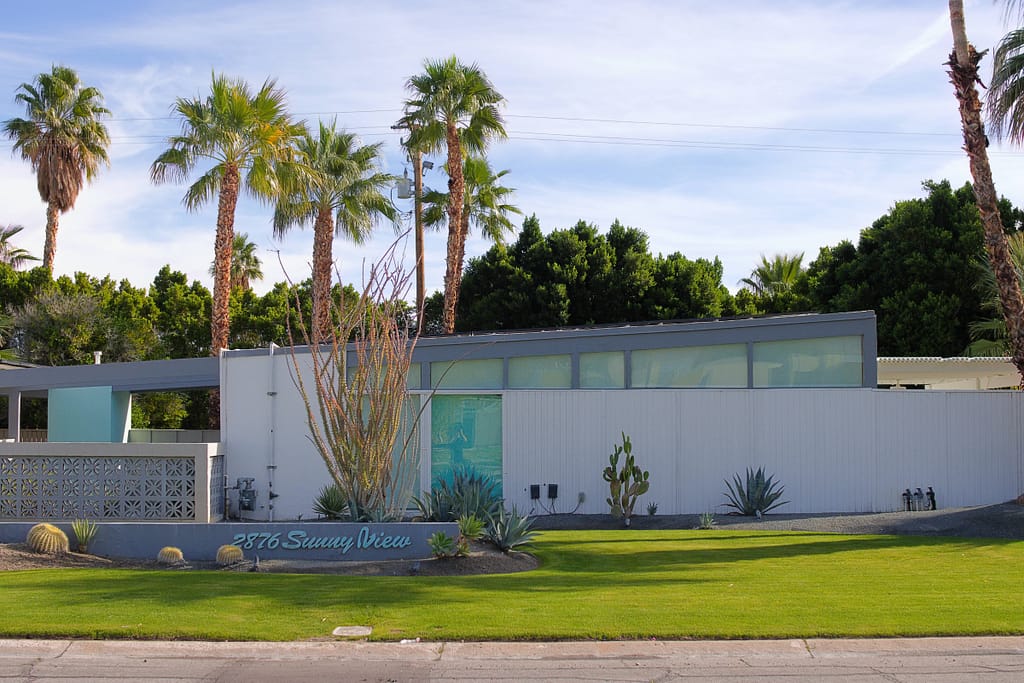
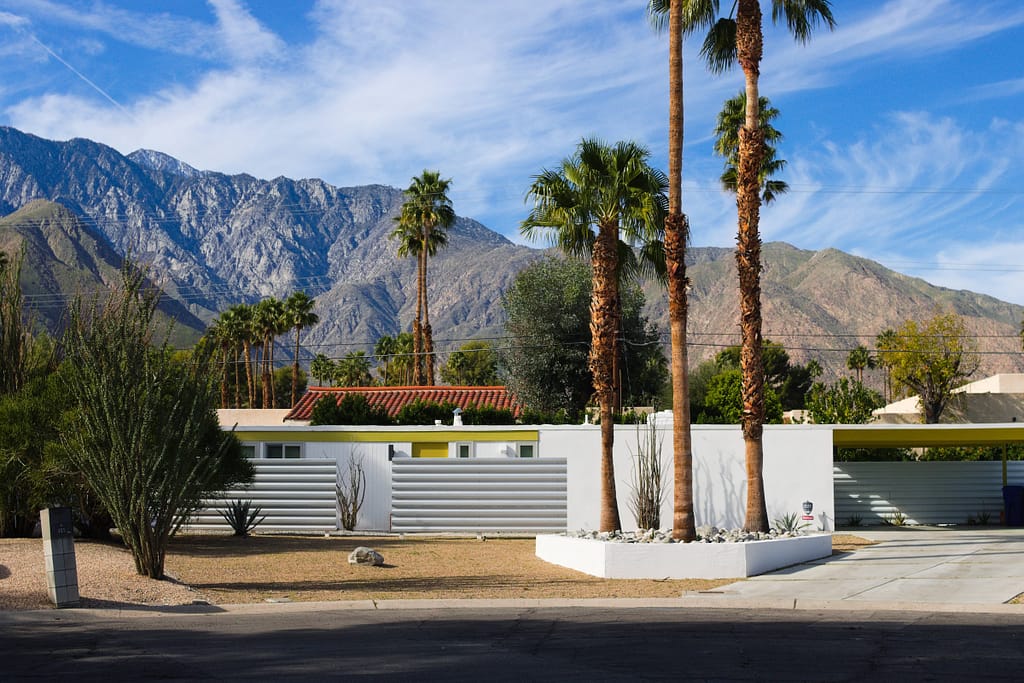
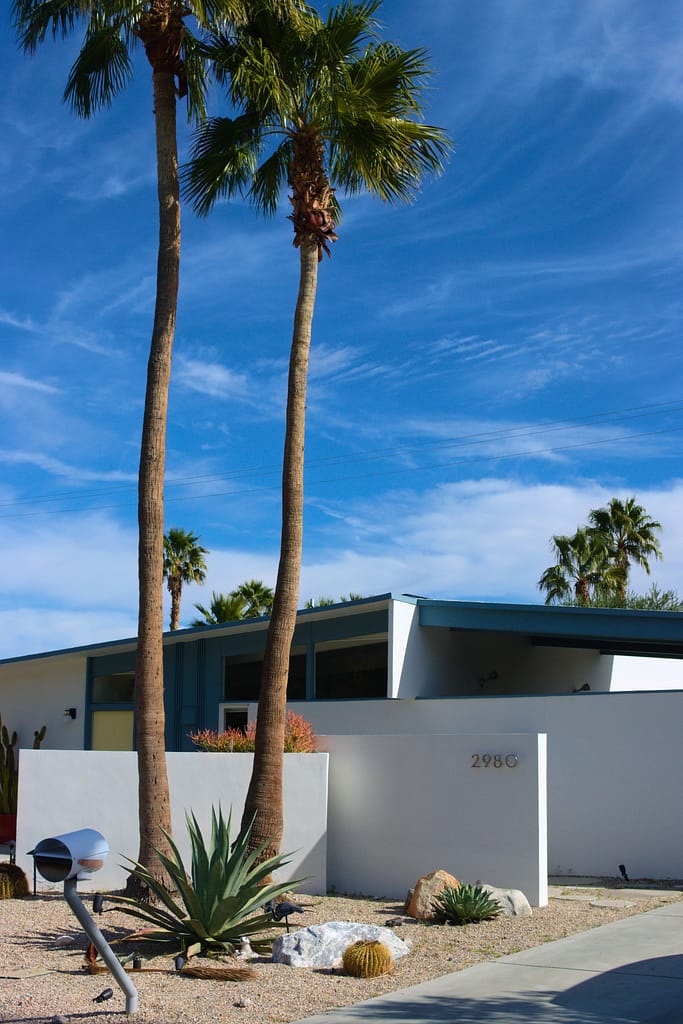
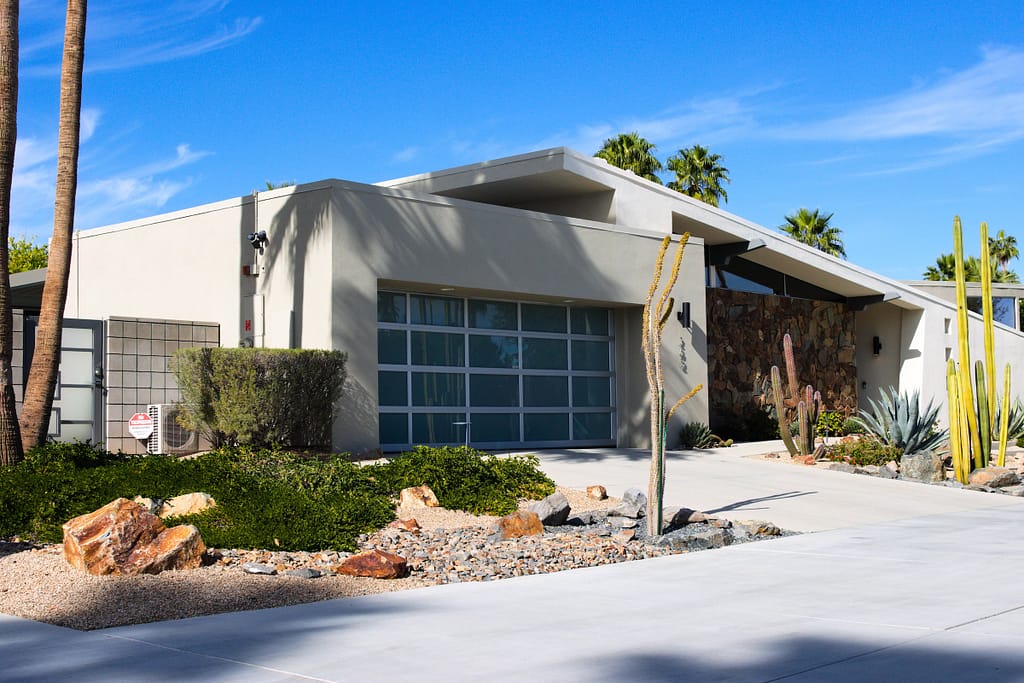
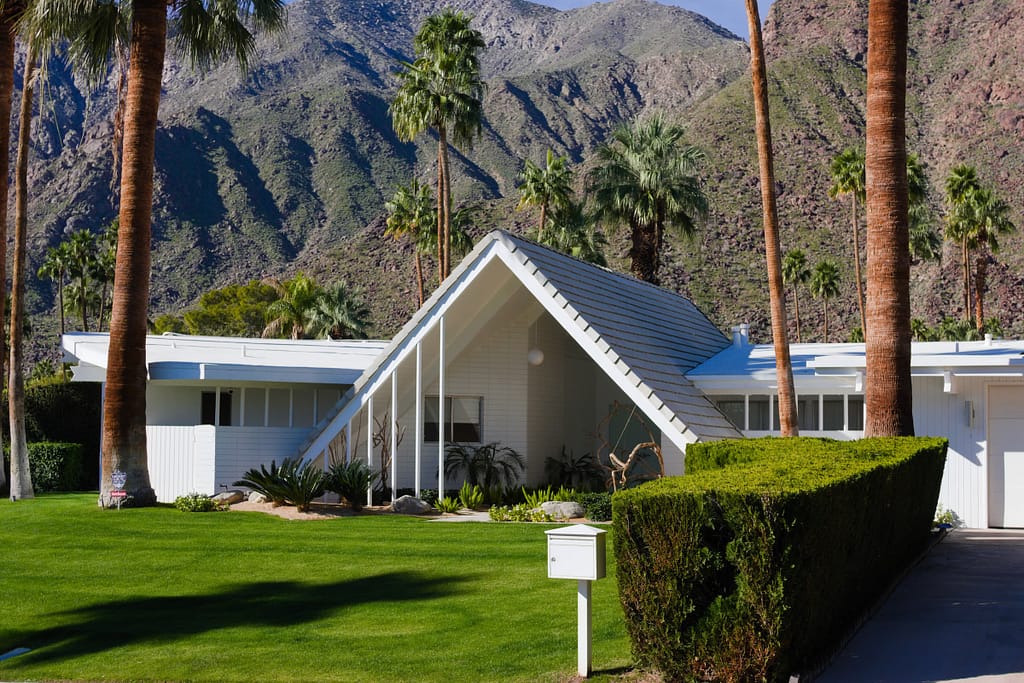
While in Palm Springs, we saw a multitude of mid-century and desert modernism architecture. The neighborhood we stayed in was filled with famous houses – triangular frame houses, mid-century modern masterpieces like Elvis’s honeymoon home and the Kaufman House. Even the ones not done by well-known architects felt intentional in their design.
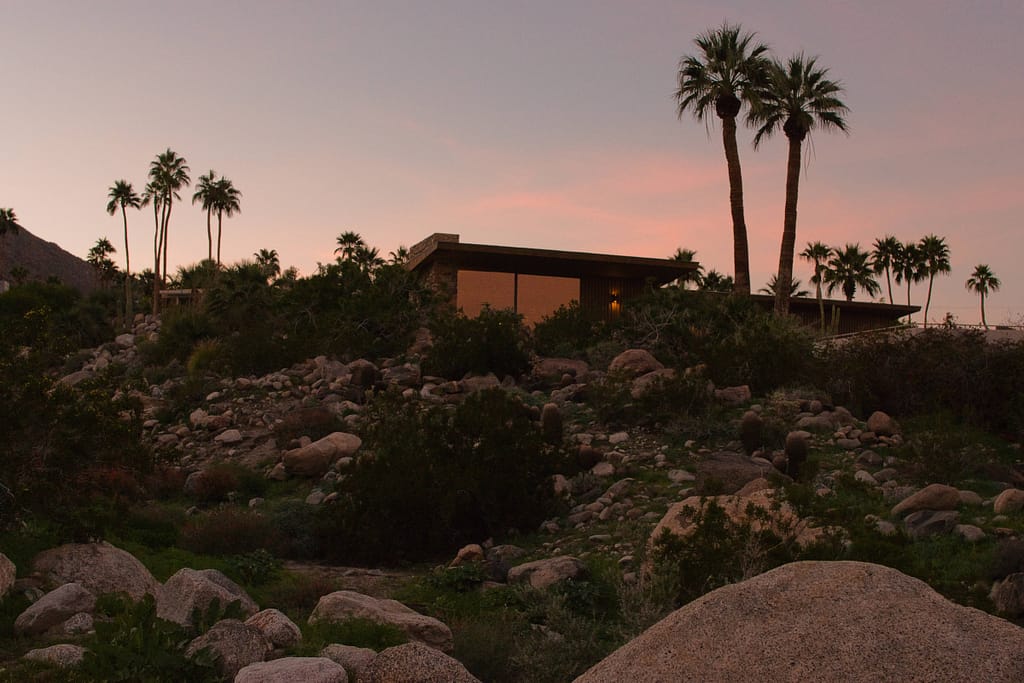
Almost all the architecture I didn’t have a chance to go inside and could only observe from the exterior. Some of my favorites were:
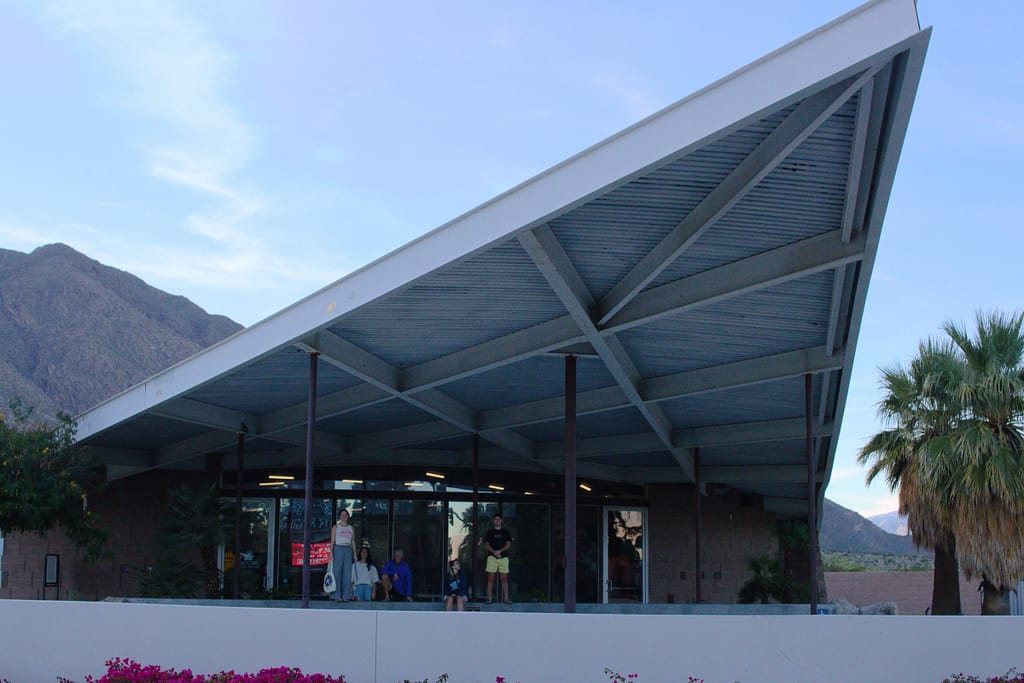
- Palm Springs Visitor Center. It was the second architectural stop we made after the Elvis honeymoon house. Originally built in 1965 as a gas station, the building is best known for its soaring, wing-like roof, which architects Albert Frey and Robson Chambers called a “hyperbolic paraboloid.” The canopy stretches nearly 95 feet beyond the front door and reminded me of one of my friends from architecture school’s tennis pavilion project that had a similar design (I sent a picture to her). It was filled with great info about Palm Springs, the architecture, and fun souvenirs. I bought a Modernism Week poster from 2025. It had a better design than this year’s.
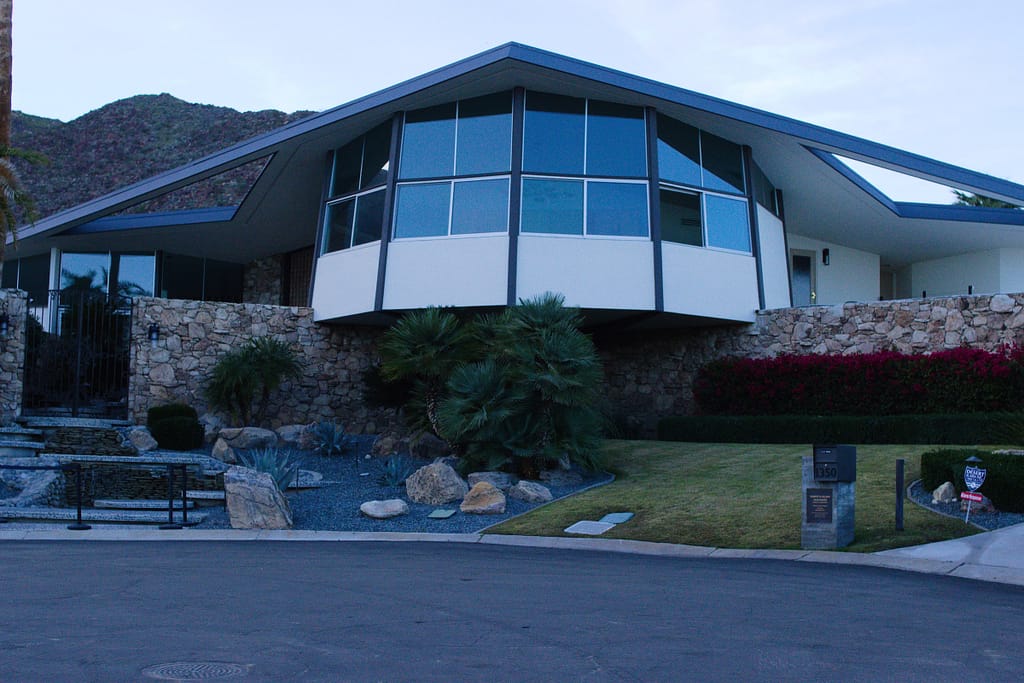
- Elvis honeymoon house. Incredibly cool form, breaks the boundary of what you’d expect a house to look like. Designed by William Krisel and Dan Palmer in 1960, it was dubbed “The House of Tomorrow” by Look Magazine in 1962. The circular layout was unconventional at the time – four interconnected pods instead of anything resembling a traditional boxy structure, with floor-to-ceiling glass wrapping around the home.
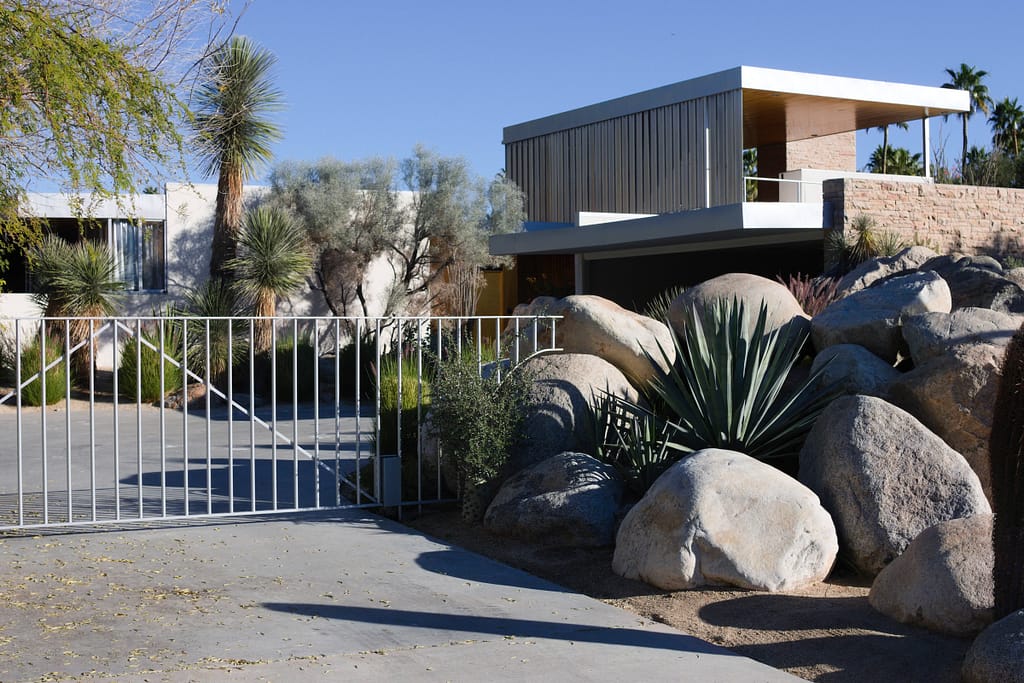
- Kaufman House. You can only catch a glimpse of it from the driveway, but look it up! it’s incredible. Designed by Richard Neutra in 1946 for department store magnate Edgar Kaufman Sr. (the client who commissioned Fallingwater from Frank Lloyd Wright), it’s considered one of the pinnacle examples of desert modernism.
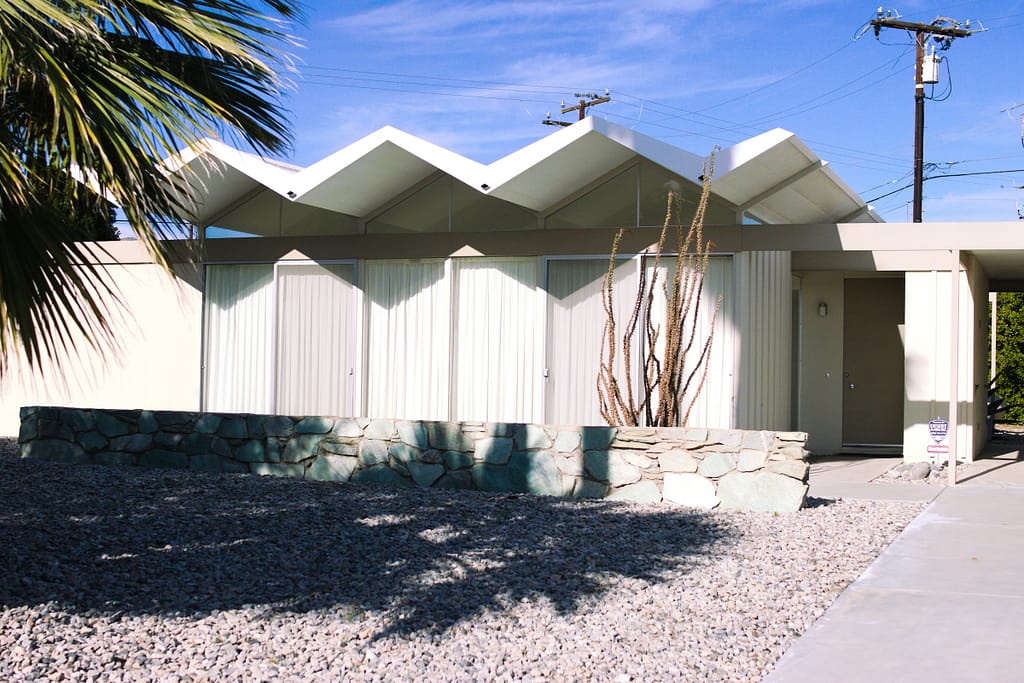
- The Wexler Houses. A series of metal houses using prefabricated components that rapidly reduced construction time. They are similar in spirit to the Case Study homes of LA. Only 7 of the originally planned 38 were built due to an unplanned increase in steel prices at the time.
- Palmer and Kristel Houses. The pair behind the Elvis Honeymoon House, a partnership with a construction company, resulted in more than 2,200 homes across the Coachella Valley, including whole neighborhoods like Twin Palms Estates and Racquet Club Estates. Their houses became synonymous with mid-century modern design: butterfly roofs, minimal ornamentation, and large glass windows. They shaped what Palm Springs looks like today.
- Dr. Franz Alexander House. Designed by modernist architect Walter S. White in 1956 as a desert retreat for psychoanalyst Dr. Franz Alexander and his artist wife, Anita. The defining characteristic that you can just see from the street is the curling gesture of the roof peeling away from the building.
- Edris House. Built in 1954 by E. Stewart Williams, who had designed the Frank Sinatra House years earlier. The Edris House stands as a defining example of the Desert Modern style. Williams reportedly said the house should look “as if it grew out of the ground rather than falling out of the sky” and it does. It was probably one of my favorite houses that I saw. It commands a beautiful view of the valley below and beautifully captures the lingering rays of sunlight during golden hour.
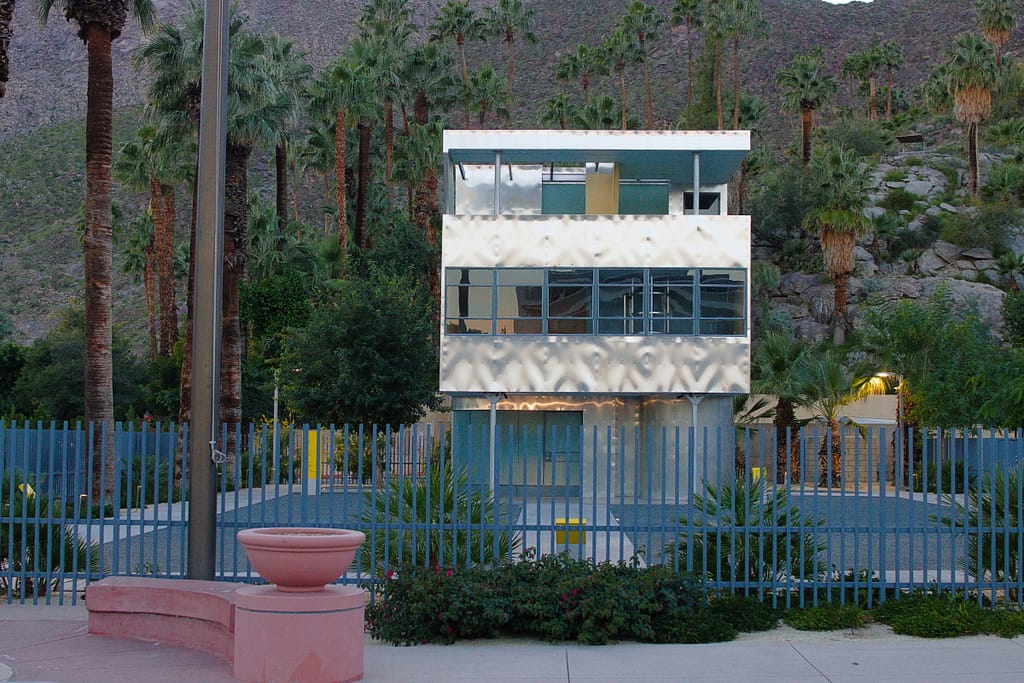
- Aluminaire House. A 3-story case study house designed by Lawrence Kocher and Albert Frey in 1931. It was the first all-metal house in the United States. For many years it was displayed at architecture shows, installed at multiple locations until it eventually it had nowhere else to go. It sat in a shipping container in storage until it was brought to Palm Springs and reassembled in 2023. Here’s a short video on it.
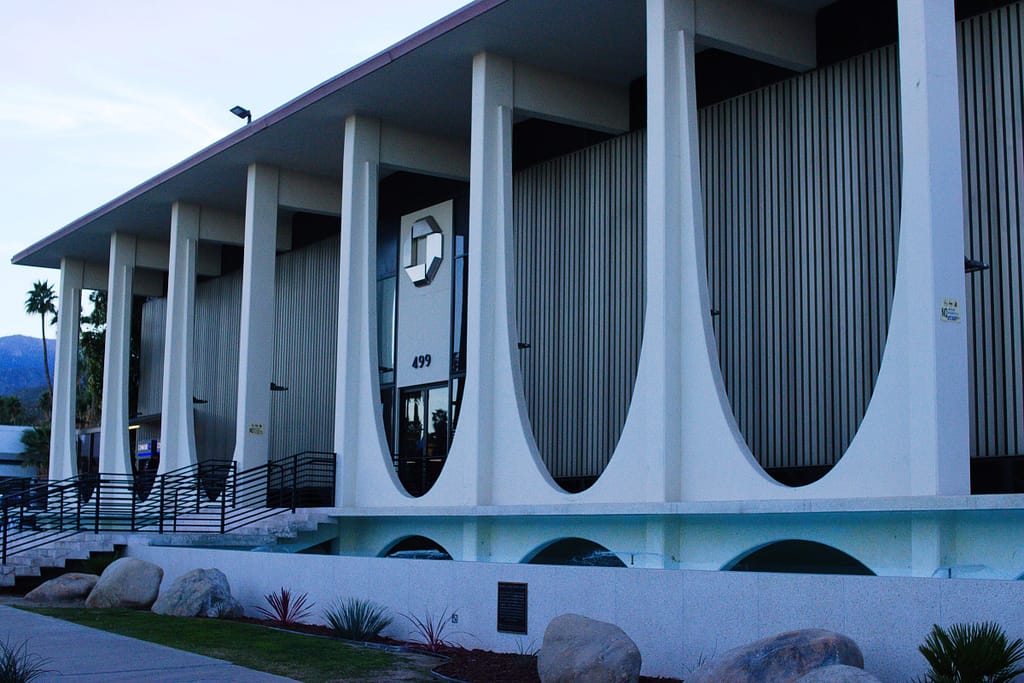
- Chase Bank. Designed by architect E. Stewart Williams in 1961. It features a floating pavilion design, with high and low windows, a raised slab, and a distinctive tapered colonnade with upside down arches. In front of it is a shallow pool. It reminds me of the Presidents house of Brazil designed by Niemeyer in 1958. It was probably one of my favorite buildings we saw.
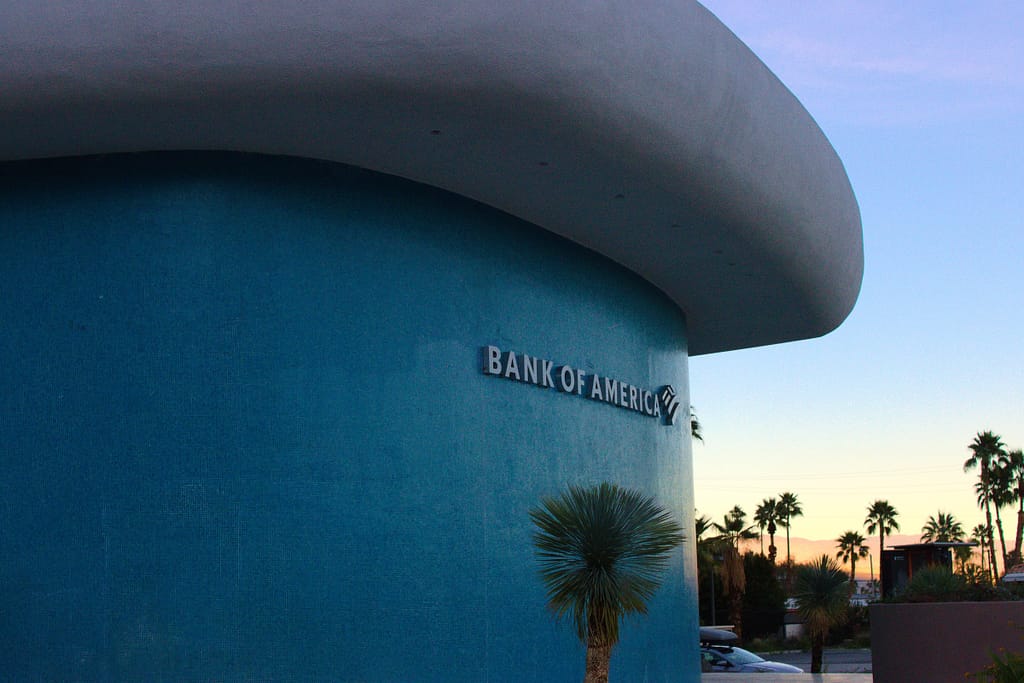
- Bank of America. Like a mushroom, the Bank of America Building was modeled after Le Corbusier’s Ronchomp chapel in France. While I feel it doesn’t quite get the proportions right, its blue curved mosaic wall exterior reflected the evening sun nicely and provided a nice pop of color.
Hiking Around Palm Springs
Endless sunny days and perfect temperatures make Palm Springs a fantastic place to do a hike or two. Nestled in the Coachella Valley, there is no shortage of mountains nearby and Joshua Tree is only an hour away. While I was there, we did two hikes.
1.Joshua Tree
This is embarrassing to admit, but I thought Joshua Tree referred to a single-stand-alone tree, not a specific type of tree and that I would see thousands of them.
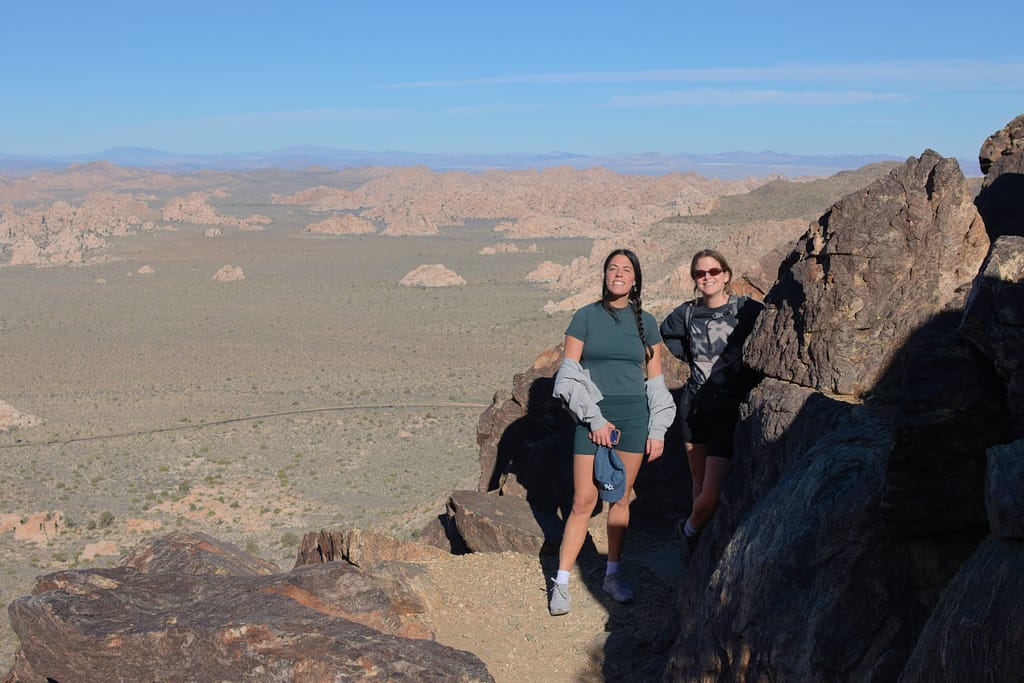
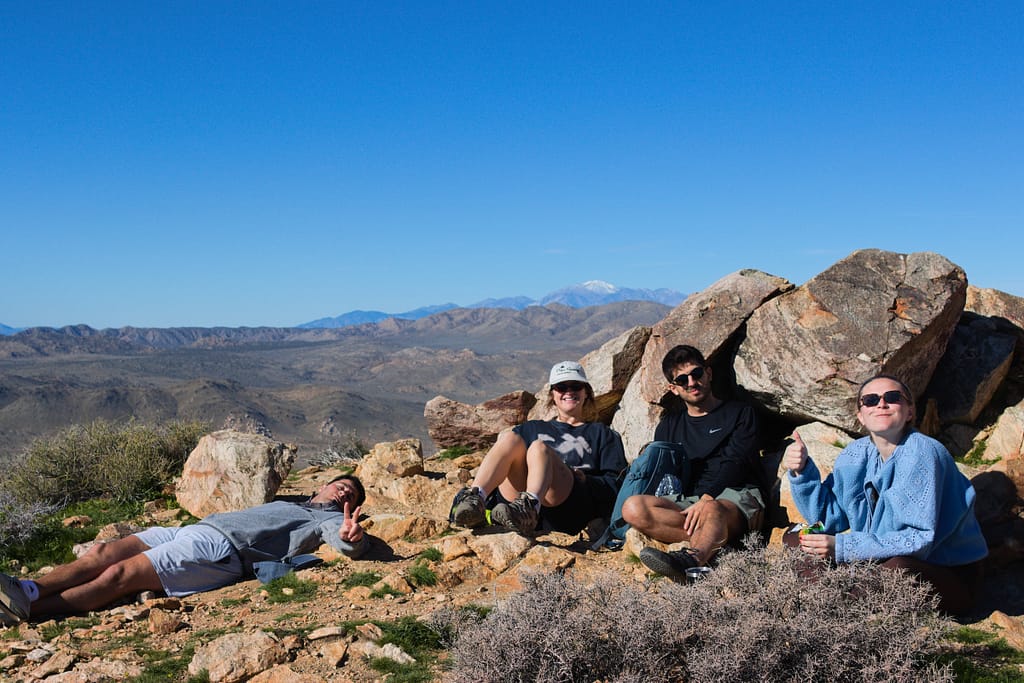
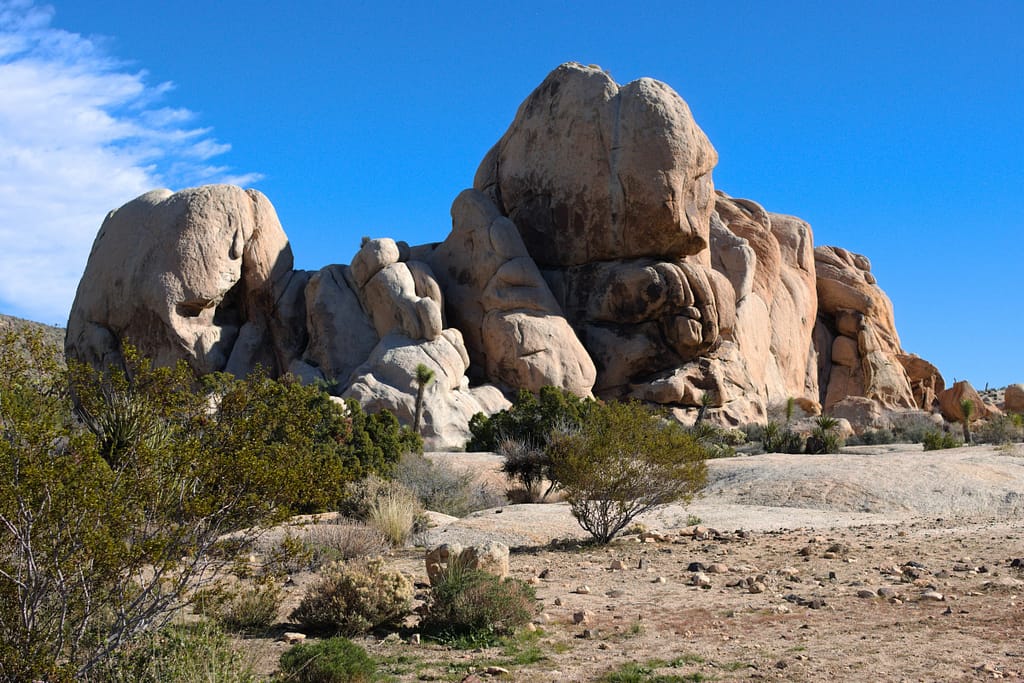
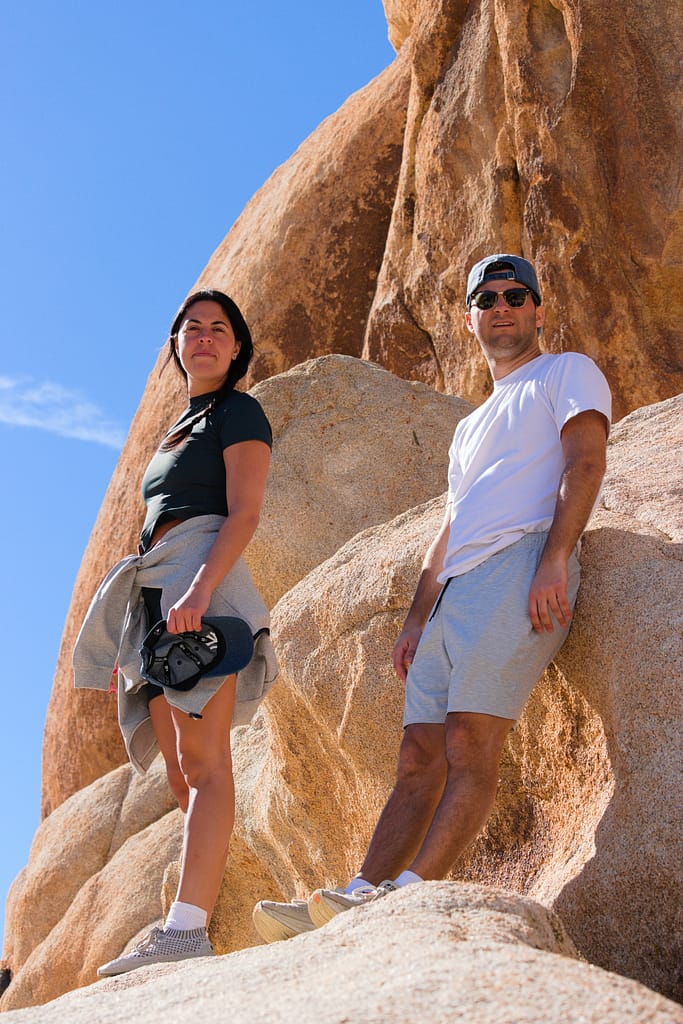
With my cousins and sister, we spent a day in Joshua Tree National Park. It’s such an extremely different landscape from anything that I’ve ever experienced. Joshua trees dot the landscape while giant rock mounds stick up from the earth like molars. We hiked Ryan Mountain in the morning, it was surprisingly chilly in the shadow of the mountain at the start, and at the top with gale force-like winds.
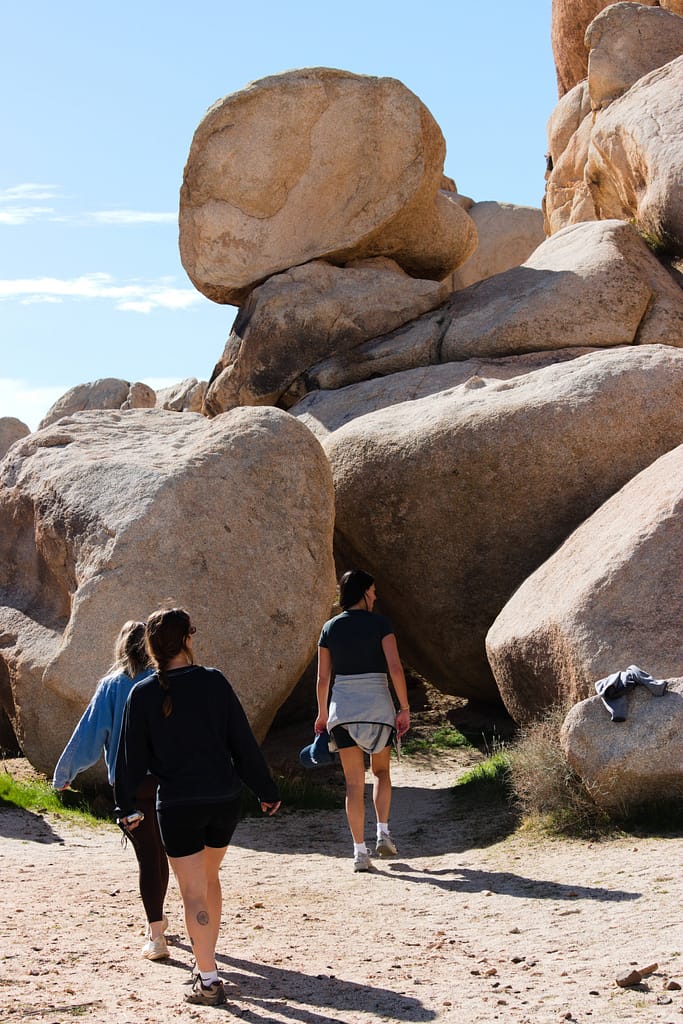
We also explored the Hall of Horrors, which was amazing. It’s a large mountain of rocks that you can walk into, scramble on, or wander around. We didn’t try to get to the top, but we found some really cool nooks and crevices. It was fun to explore something that didn’t have a specific path to follow.
The last stop was Skull Rock. It was by far the most crowded of all the places, and if it weren’t for the hordes of people and its Google Maps marker, I think I would have easily walked or driven by without a second thought. I guess it kind of looks like a skull.
2.Indian/Palm Canyon
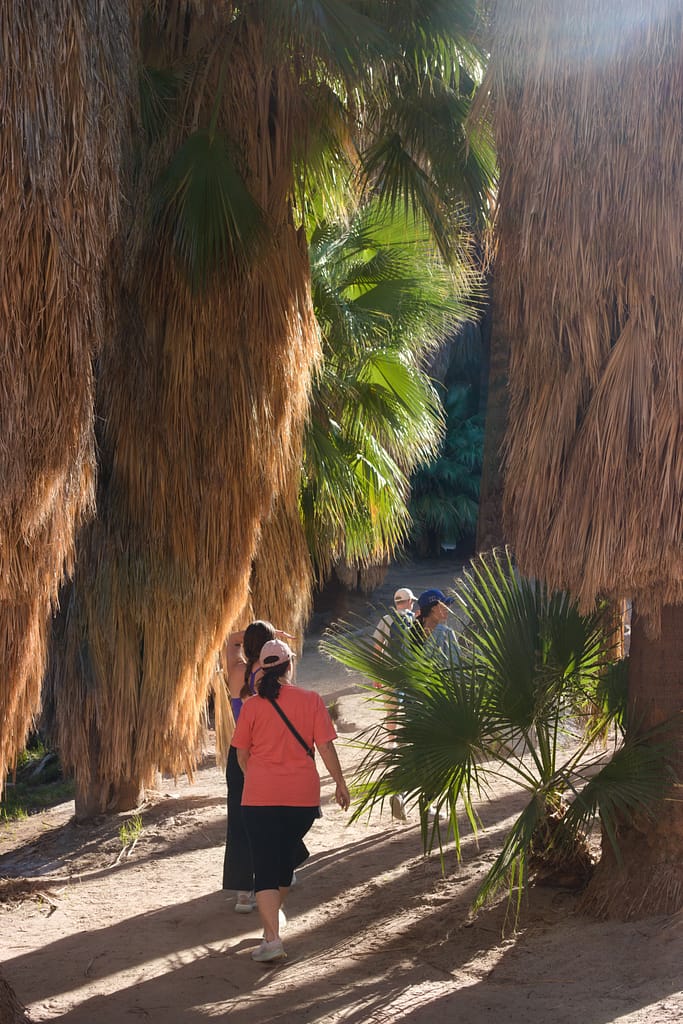
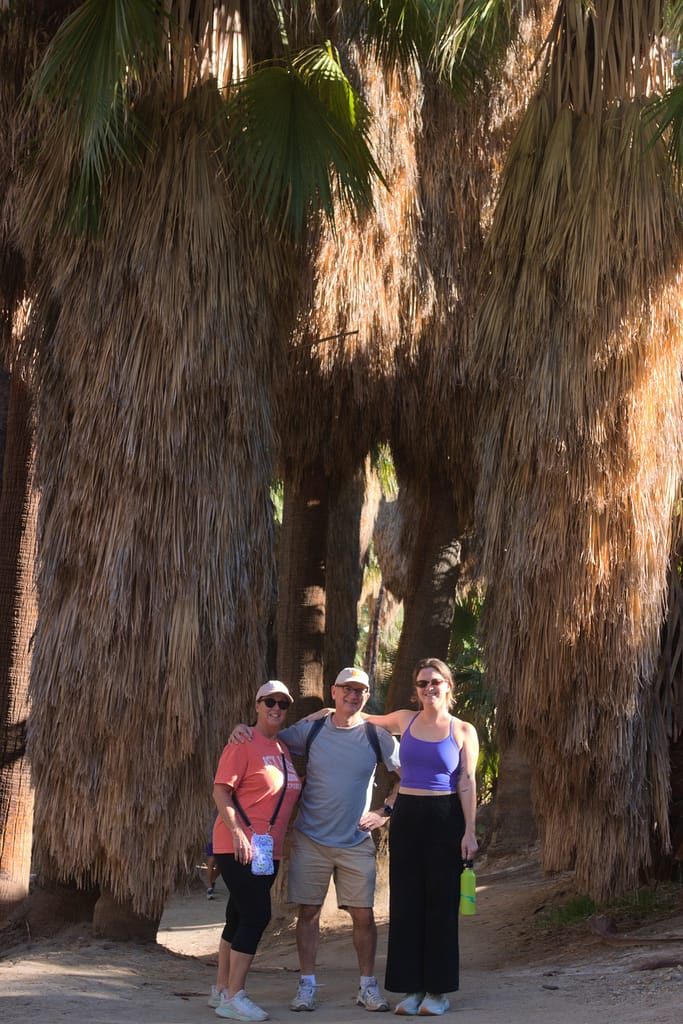
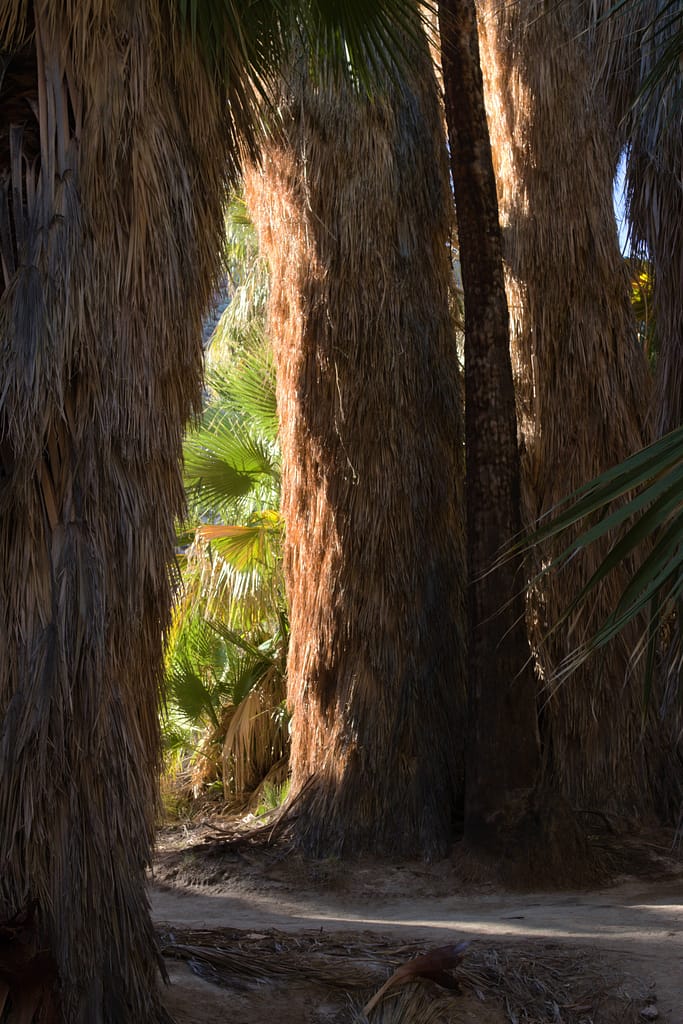
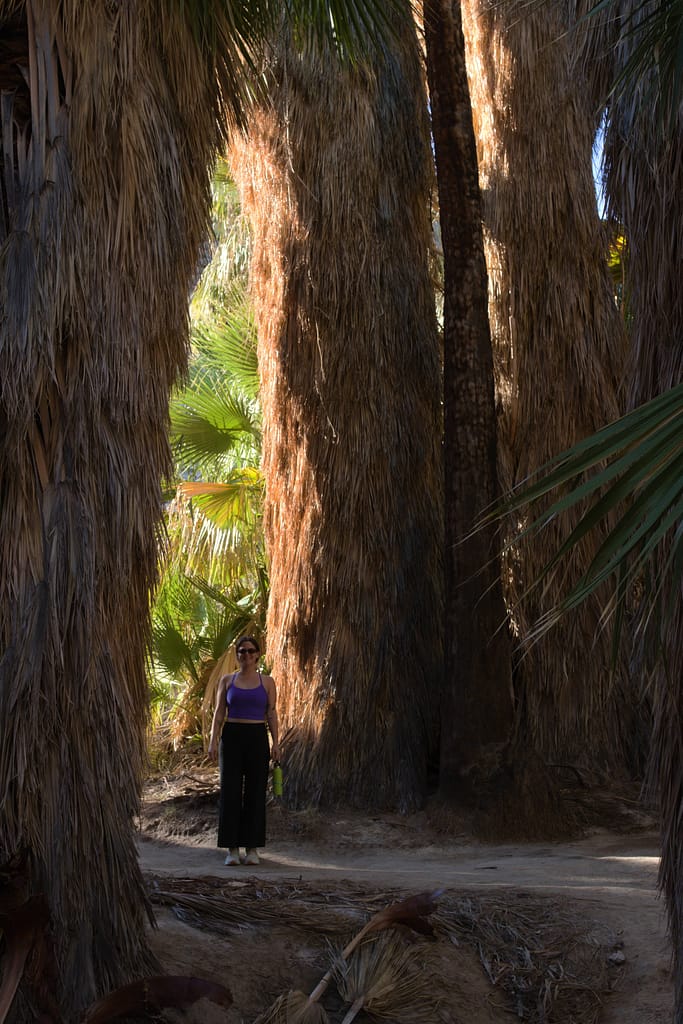
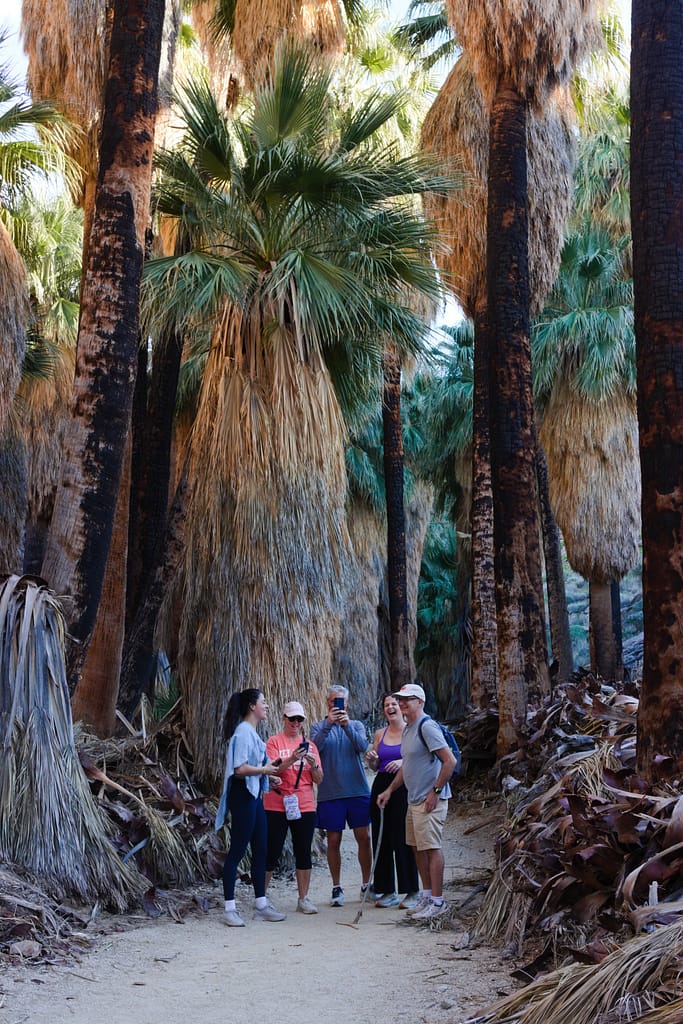
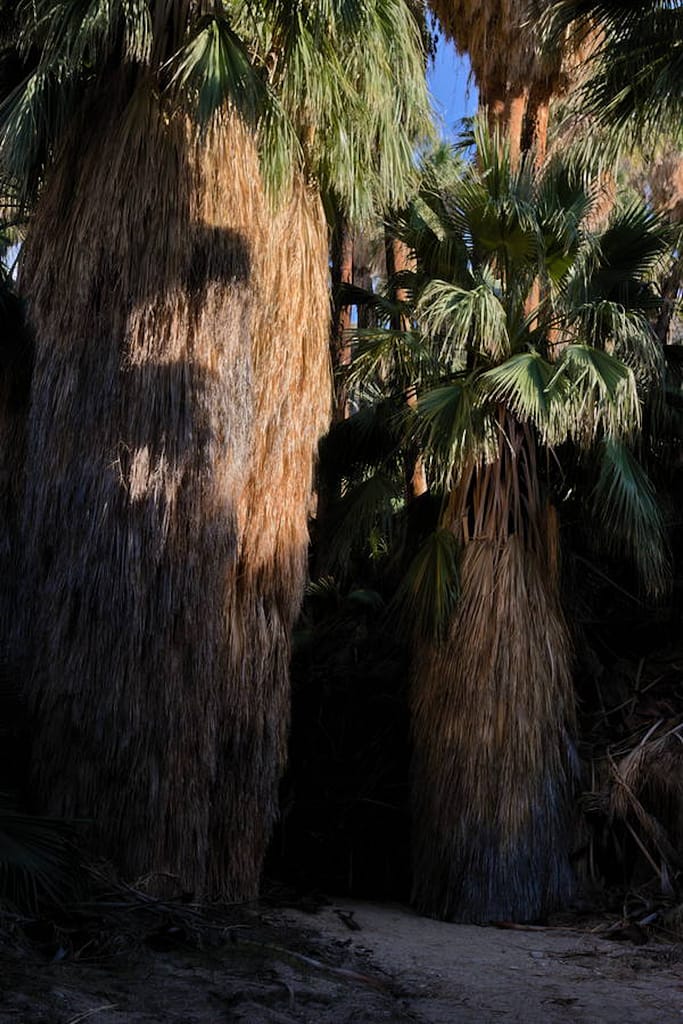
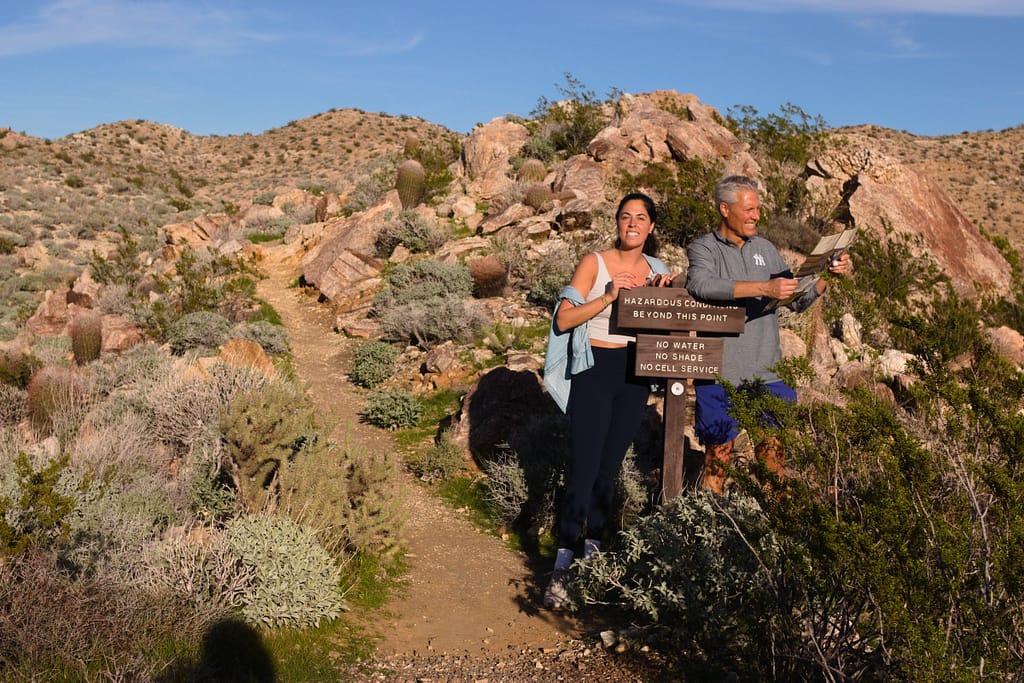
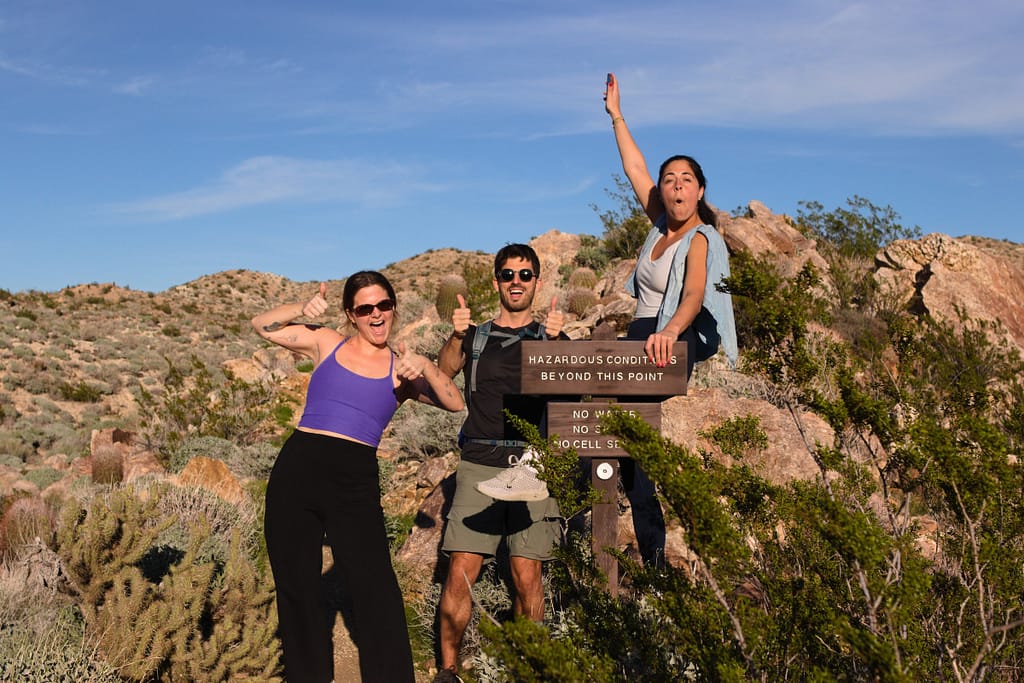
I don’t know the name of the particular hike we did, but it wasn’t too far outside of Palm Springs, located in Indian/Palm Canyon. It was a more casual hike than Joshua Tree because we started later in the day. Most of it was spent walking among giant palm trees. I have never seen anything like it – they were gigantic, and since it was golden hour, the way the sunlight hit the trees and filtered down to the floor made the whole experience feel surreal. It reminded me of walking through the temples in Egypt. Egyptian columns were actually designed to mimic the leaves of date palms.
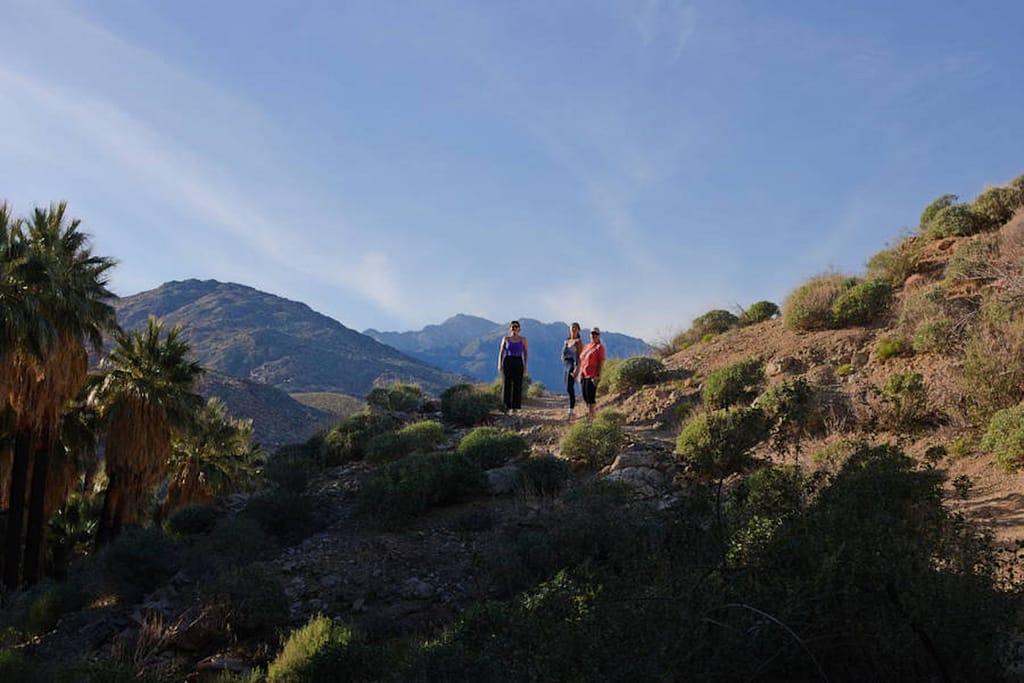
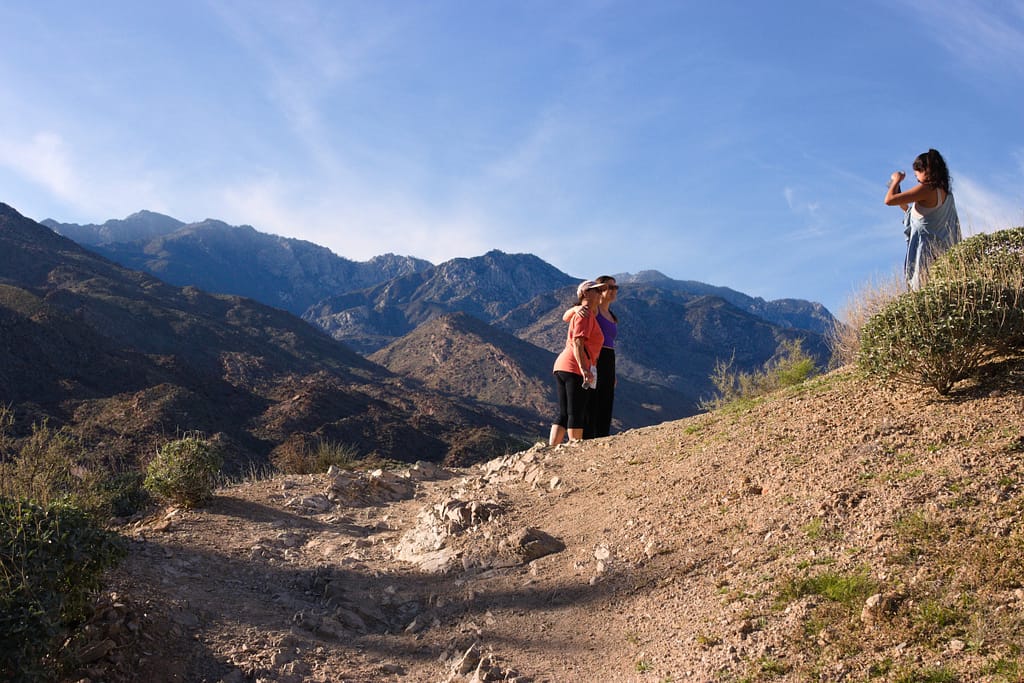
We left the valley of palms and hiked slightly up one of the mountains, where we were rewarded with beautiful views of snowcapped mountains in the distance. If I’d had more time in Palm Springs, I would have gone back and done another hike there. It was so close to the city, but it felt like you’d been transported to another world.
Bonus Stop
After the Joshua Tree hike, we stopped at Pioneertown. It was originally built in the 1940s as a Western movie set and a live-work community for actors, featuring 1880s-style buildings on an old-fashioned Main Street. I didn’t know what to expect, and I loved it.
I felt transported back in time to a pioneer town. We stopped at the only place in town to get a drink, the Red Dog Saloon. I don’t drink, but I got a michelada because my sister loves them and I thought, why not? As the bartender walked us through the drink menu, he mentioned how they make a lot of the stuff in-house. Everything sounded delicious. Almost everything in the michelada was homemade, and it was delicious. Once my sister tried it, she had to get her own. I would go back just for that drink.
Overall, the trip to Palm Springs was fantastic. What more can you want than family, architecture, and hiking?