Walking around Bed Stuy East of Pratt, you notice a clear departure from the classic Brooklyn brownstone architecture. The facades feel busier. The details feel added rather than original and the architecture speaks a different language. That’s because this area overlaps with a large Hasidic community, extending east toward Crown Heights, roughly between Broadway, Kingston Avenue, Atlantic Avenue, and Eastern Parkway. The neighborhood lines blur, but architecturally, the shift is immediate.
If you find yourself within this zone and standing in front of a building questioning certain design choices, like an oddly placed balcony, mismatched materials, or an addition that feels out of scale, there’s a good chance it belongs to the Hasidic community. These buildings often evolve over time, shaped by very specific cultural, religious, and family needs.
Characteristics of Hasidic Architecture in Bed Stuy
Hasidic architecture is less of an architectural style and more a set of moves. Additions are common. Rear or side yard extensions and vertical expansions often appear wherever zoning allows, and sometimes where it may not. Facades are resurfaced in stucco, stone veneer, or a glossy stone occasionally obscuring the original brownstone. Decorative elements borrowed from multiple places at once, suburban railings, classical columns, ornamental metalwork. The result is an eclectic mix of architectural styles and a clear distinction of their own.
On my walk to work, there is a beautiful brick building being converted into a multi- family apartment, and they are covering the first floor brick with a thin stone veneer. I couldn’t believe my eyes as I walked past it.

The Outdoor Balcony
The most prominent feature of Hasidic architecture is the outdoor balcony. Once you start noticing them, you can’t stop. They project off second and third floors, often extending deep into the yard or hovering over side setbacks and the sidewalk. Some appear to cantilever far beyond what feels structurally comfortable and far beyond what is allowed. Others are supported by slender steel posts or wood framing, sometimes without visible cross bracing.
As someone practicing architecture, it’s hard not to pause and wonder about the structural and regulatory considerations behind them. NYC building codes are often very strict. I have to imagine that these balconies are legally permitted and engineered, even if they look precarious.
The balcony serves a real purpose, outdoor space for religious observance during Sukkot. Families eat meals, host guests, and sometimes sleep within them to commemorate the temporary shelters used by the Israelites in the desert.
From a design perspective, they are visually jarring. They are an appendage added after. This isn’t necessarily bad. The term for this type of architecture is parasitic architecture; attaching a new structure to an existing building to expand its volume. These balconies were added as a way to meet the needs of the family and prioritized these needs over proportion, materiality, or the original architecture beneath them. They are utilitarian, using structural metals and grating in the most efficient way possible. Function leading form.
In newer construction, there has been an attempt to integrate it into the architecture. Size-wise, they’re significantly smaller than their metal-cage-added-on counterparts. I think a fun design challenge would be to reimagine how these balconies can be added onto these historic structures and provide an aesthetic addition to the building and the streetscape below.
At the end of the day, these buildings are less about aesthetics and more about adaption. Brooklyn and New York’s architectural history has always been about adaptation. Single-family homes becoming multi-generational homes becoming multi-family apartments. The balconies of Bed Stuy are just a part of that evolution. They may be clumsy and visually jarring, but they reflect the same impulse that has shaped the city for decades.
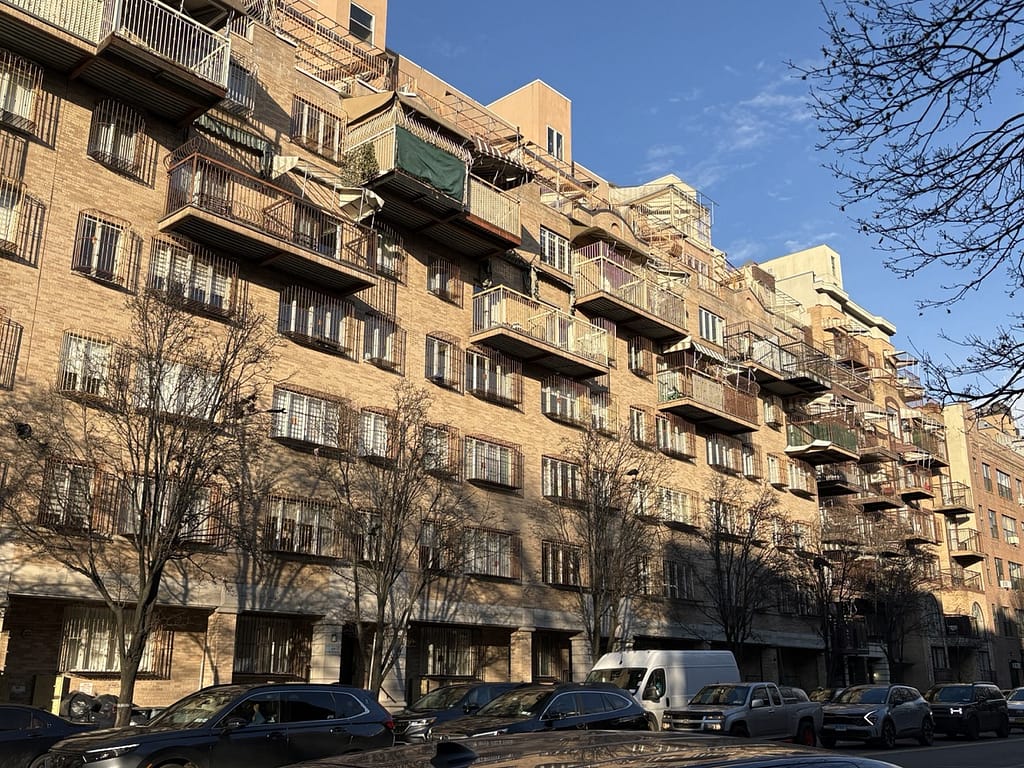
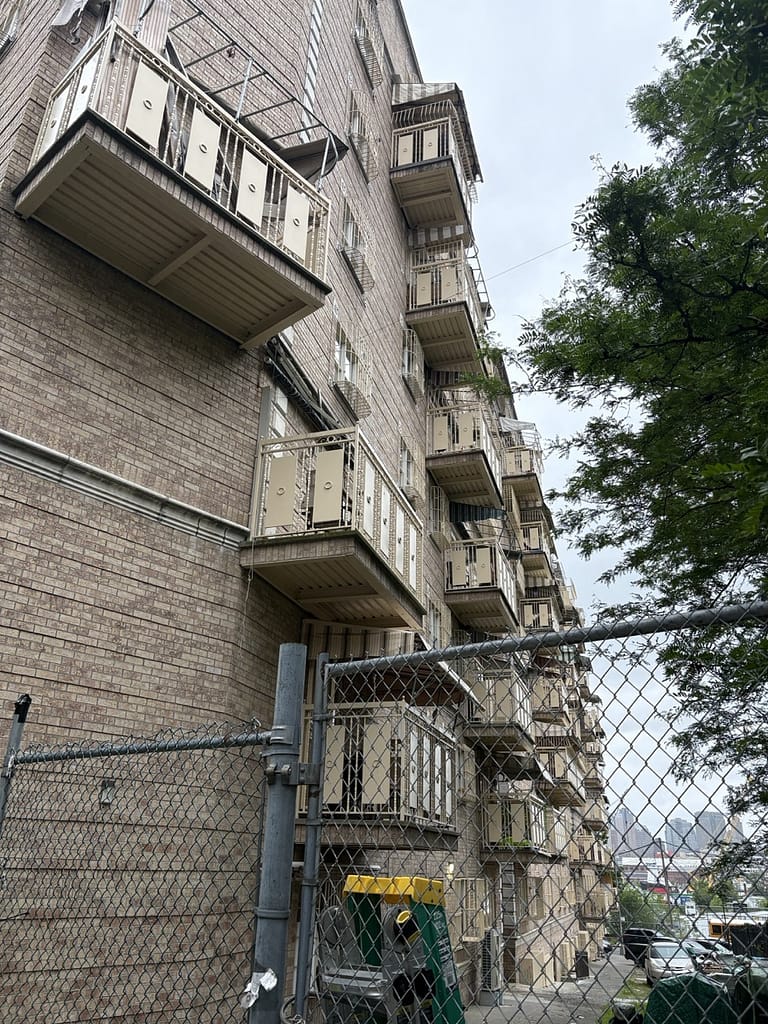
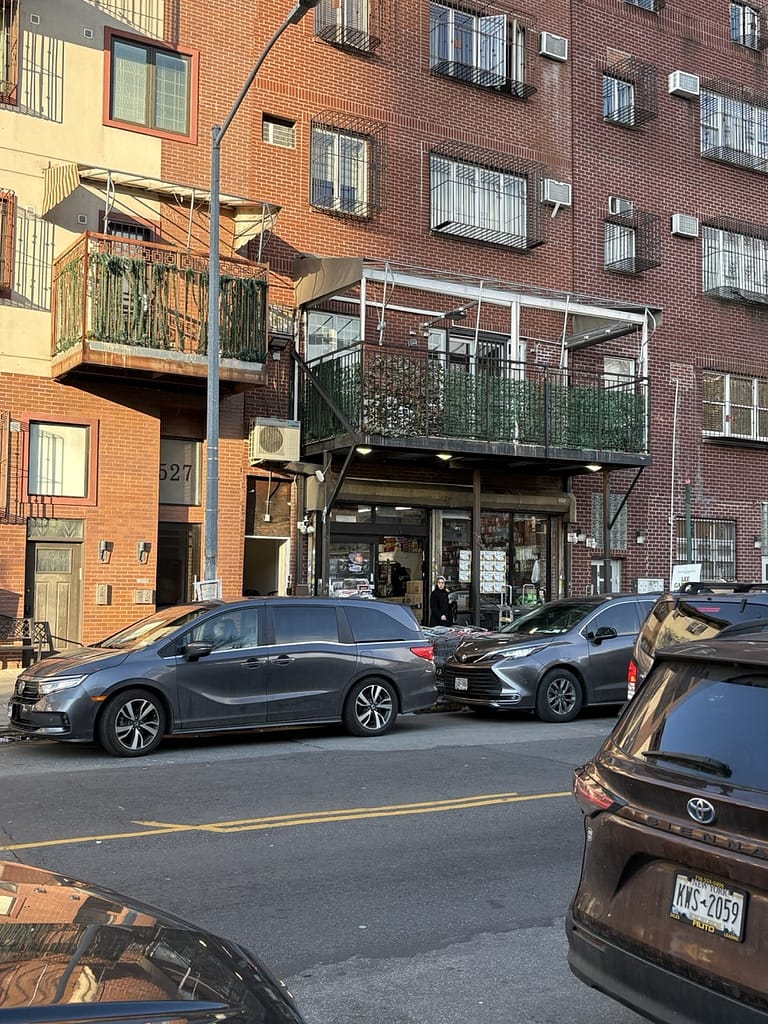

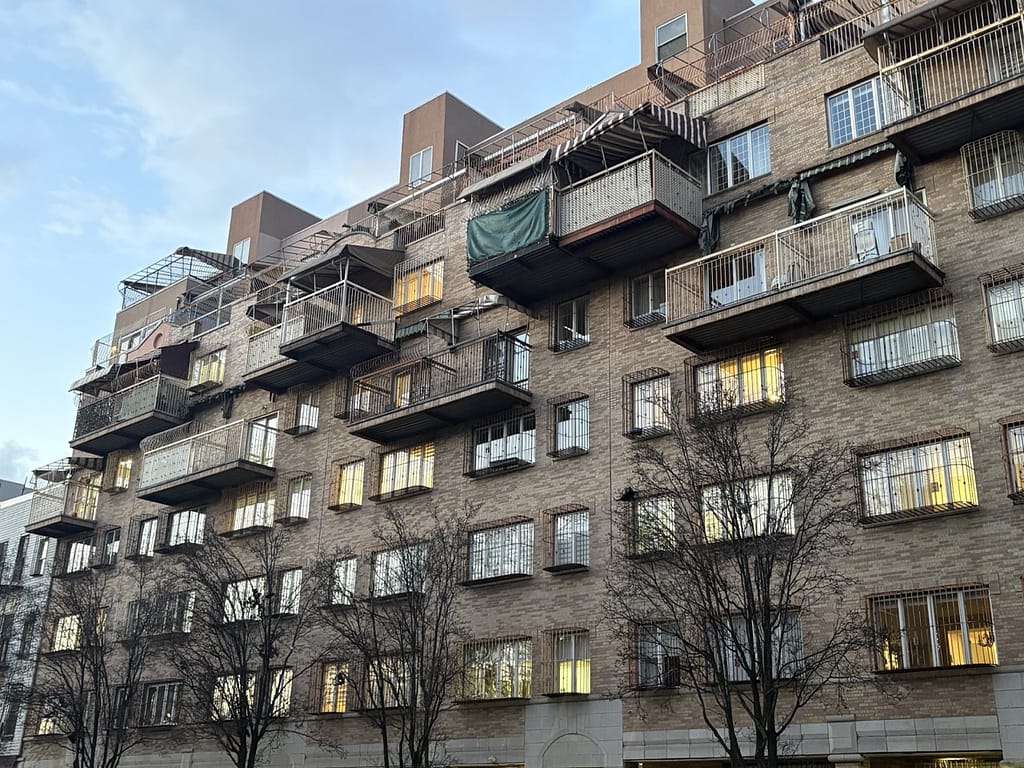
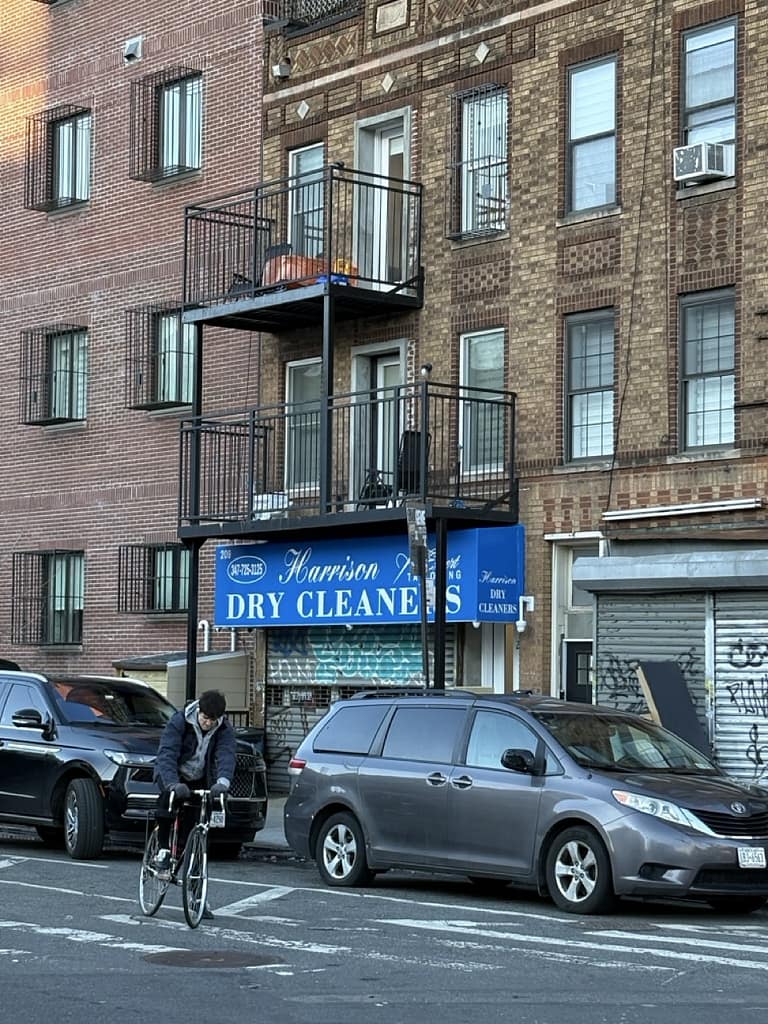
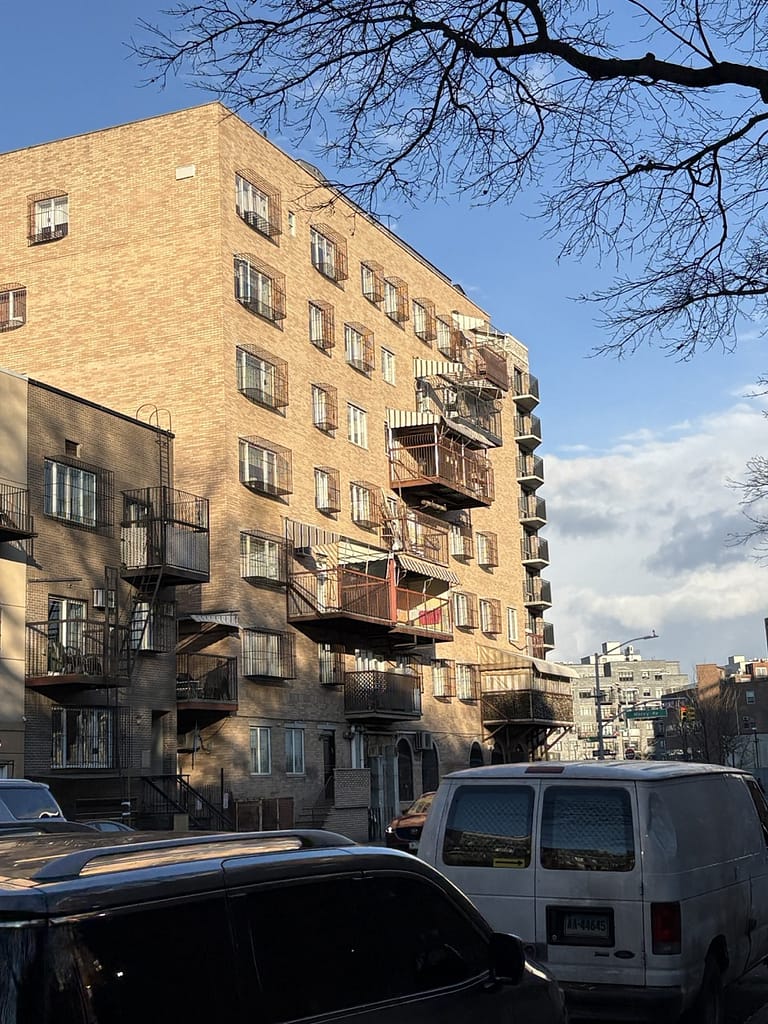
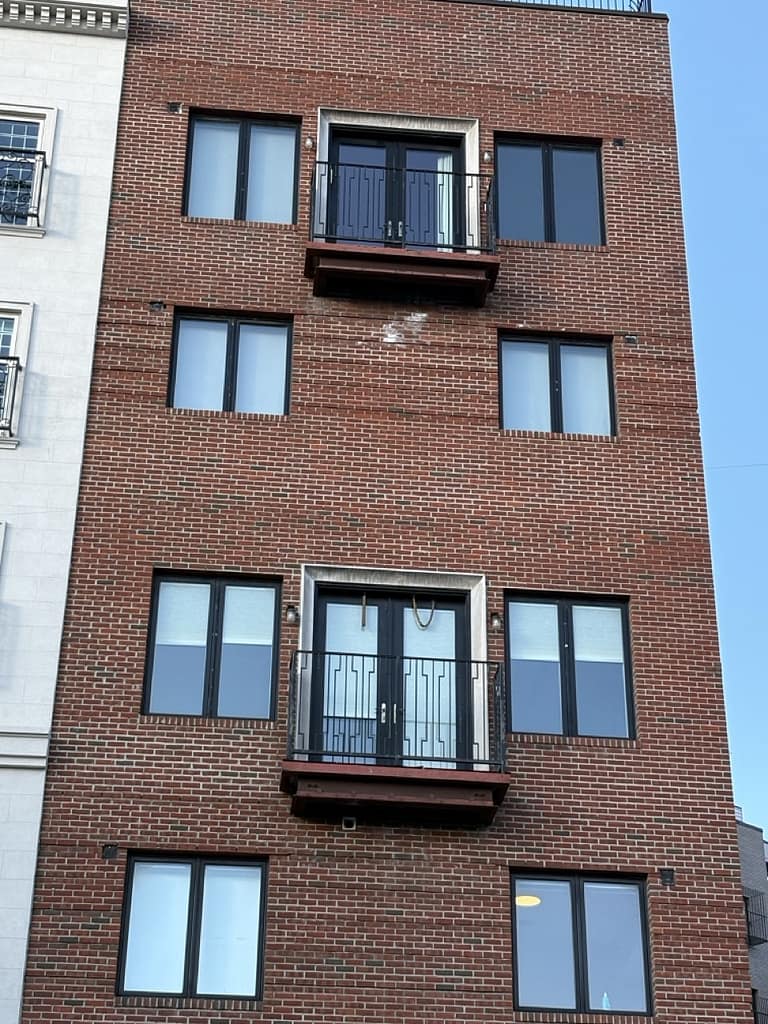

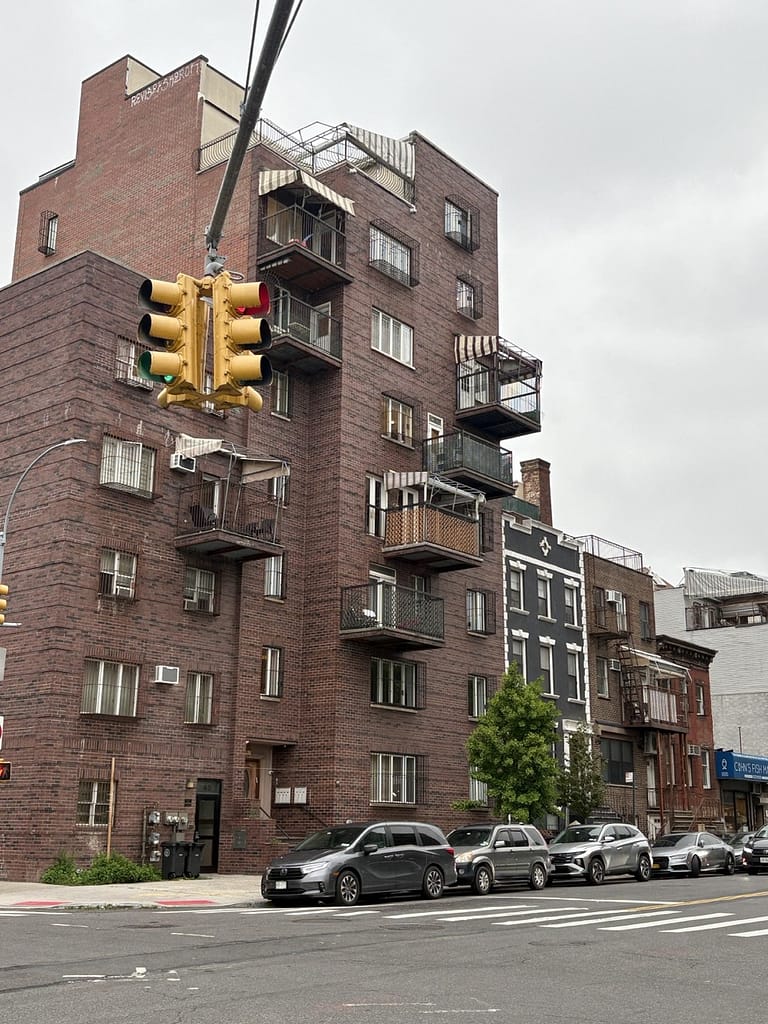
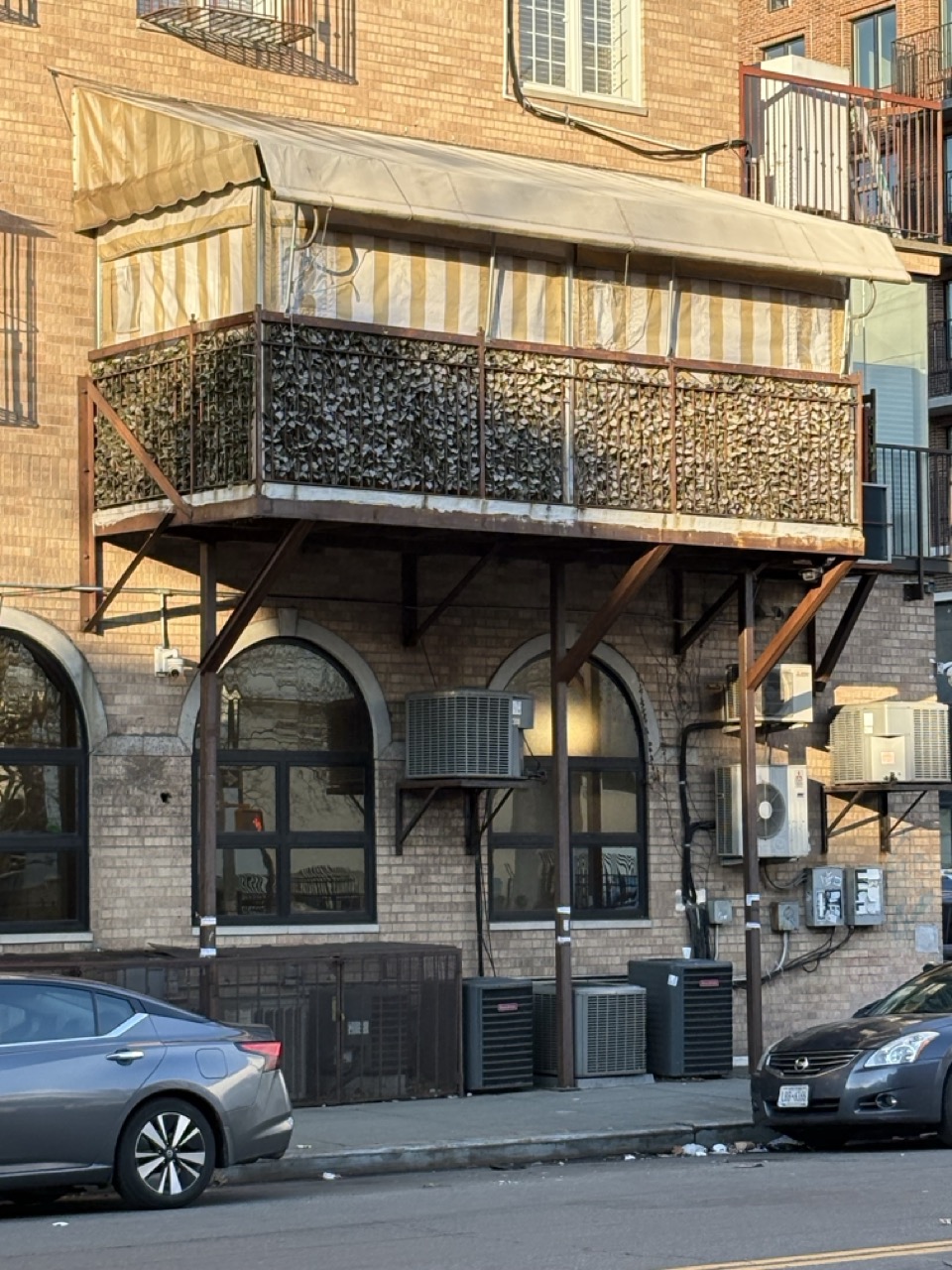
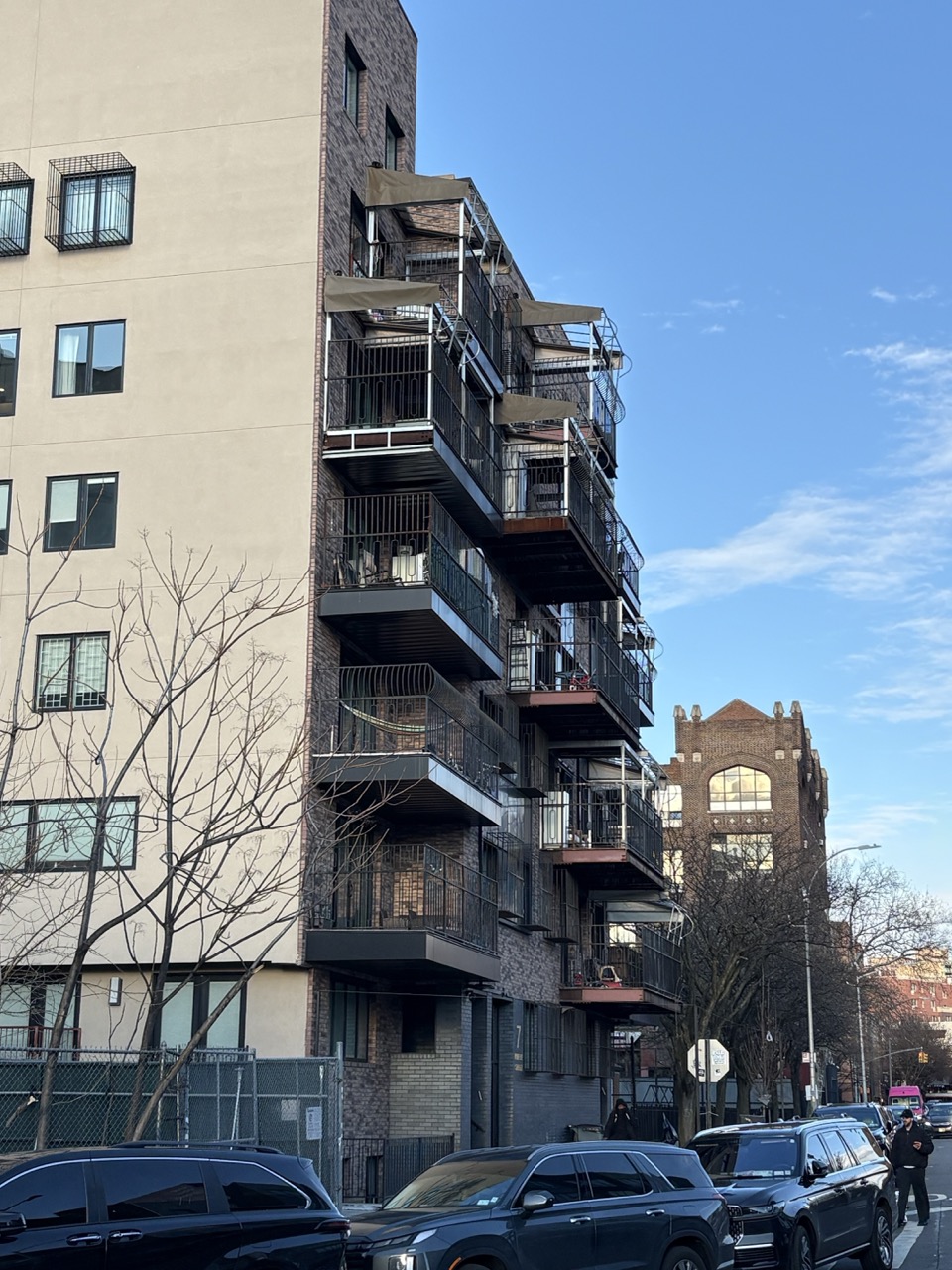
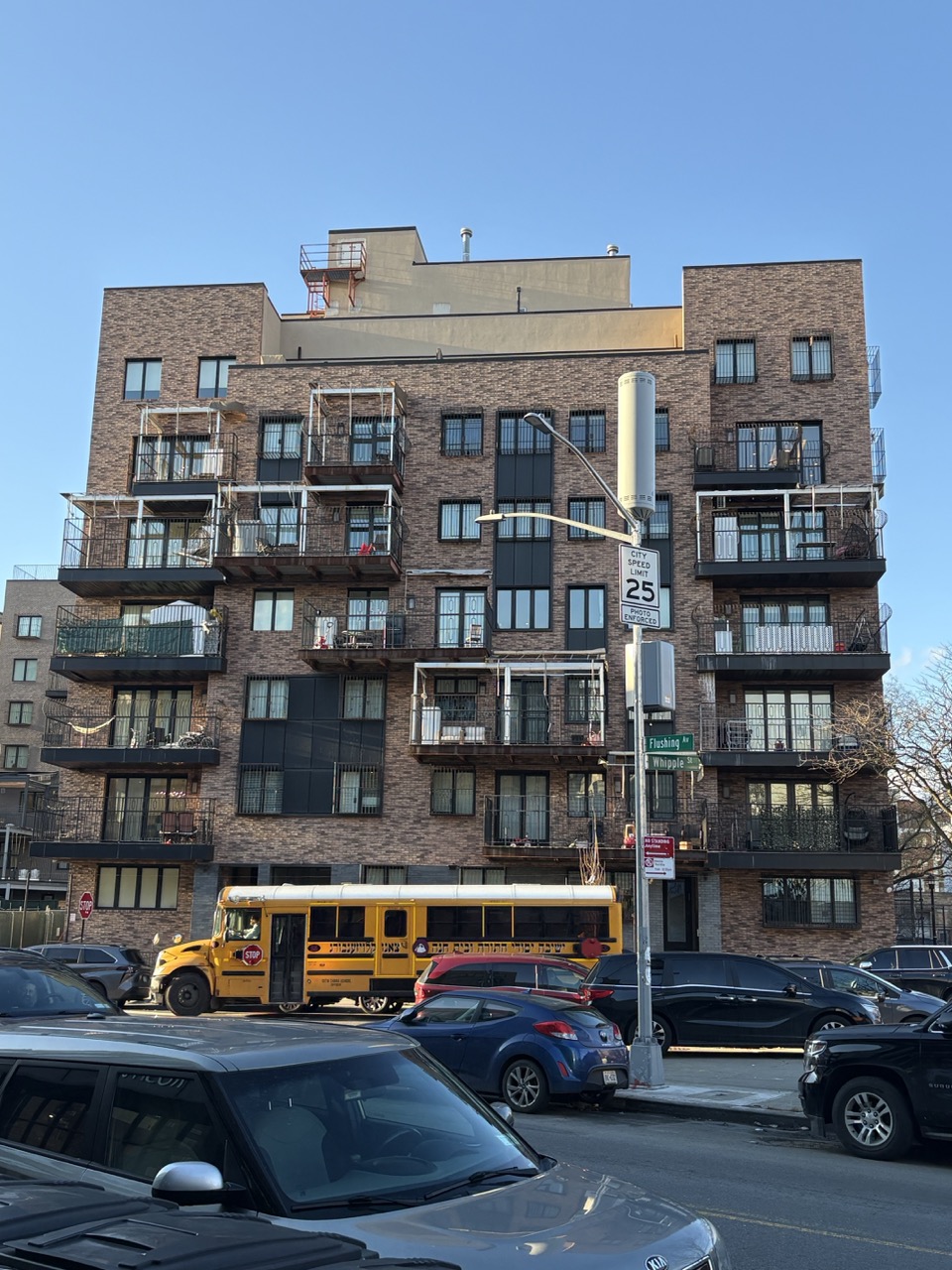

How These Balconies Are Able to Exist
Many of the balconies that appear to project far beyond what seems allowable to exist, sit in the space between zoning limits, building code and enforcement reality.
Structurally, a balcony can meet NYC building code requirements if it is properly engineered for loads, connections, railings, etc., but fail to meet the zoning regulations. Zoning regulations allow balconies to project into side, rear and front yards under specific conditions, often up to a defined maximum depth and height. In addition, many buildings fall under “existing non-complying” status, meaning additions that were legally built under old zoning rules can remain, even if they don’t abide by current ones.
The current code states that balconies may project not more than 2′ 6″ from the street line. In some cases, these balconies do extend beyond the property line and into the public sidewalk. While, structurally sound, many exist in a grey area of existing conditions, enforcement and absence of complaints; demonstrating the complexity of overlapping codes and relationship between zoning and right-of-way regulations, which is not always clear.